
Schneider Electric plant in Wuhan recognized as one of three global “Talent Lighthouses” by World Economic Forum
Schneider Electric, the global leader in energy technologies, today announced that its plant in Wuhan (China) has been recognized by the World Economic Forum (WEF) as a Global Lighthouse for Talent—one of only three sites worldwide to receive this designation.
The Global Lighthouse Network is a World Economic Forum initiative that recognizes advanced manufacturing sites and value chains that have achieved exceptional results in productivity, supply chain resilience, customer centricity, sustainability, and talent development. The initiative was co-founded with McKinsey & Company and is supported by an advisory board of industry leaders who collectively shape the future of global manufacturing.
A new award category—Talent Lighthouse—identifies manufacturing sites that achieve a transformational impact on the workforce through advanced solutions in work process and safety design, talent planning, engagement and onboarding, development, and workforce effectiveness.
The Wuhan plant became Schneider Electric’s ninth Lighthouse site globally and the first recognized for talent development, complementing the company’s eight other Lighthouse factories and distribution centers, including five Sustainability Lighthouses.
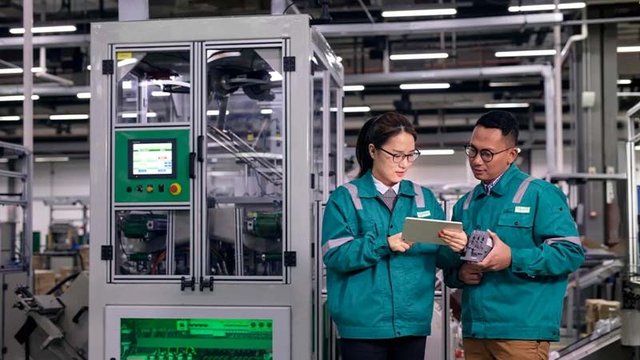
As Schneider Electric’s strategic supply chain hub in China and a model of digital manufacturing transformation, the Wuhan plant faced significant workforce challenges driven by rapid automation and a 239% expansion of its product portfolio. Initially, only 20% of employees had automation skills, onboarding new employees took 75 days, and technical staff turnover reached 48%.
Over the past five years, the plant increased its automation level by 55% and expanded its product portfolio by 239%, creating a critical shortage of qualified personnel. To address these challenges, Schneider Electric implemented a people-centered “workforce of the future” model that combines technology, partnerships, and continuous learning.
-
Training future talent: in partnership with 11 vocational and technical institutions, the company introduced digital internship programs, AI labs, and scholarships, creating a sustainable talent pipeline with the required skills.
-
AI-based competency management: AI identified and tracked skills gaps, assigning personalized learning programs complemented by career pathways based on a “pay for skills” principle. Workforce readiness increased from 20% to 76%, and 56% of employees upskilled.
-
Human-centered planning: optimized task allocation reduced overtime and improved order-fulfillment performance.
-
GenAI-assisted maintenance: intelligent prompts and a mentoring system reduced repair time and lowered technical staff turnover from 48% to 6%.
-
Accelerating new product introduction with AI: automating routine tasks freed engineers for higher value-added work and reduced the new product launch cycle by 66.7%—from 36 to 12 months.
“The Fourth Industrial Revolution is as much about people as it is about technology,” said Mourad Tamoud, Chief Supply Chain Officer at Schneider Electric. “With our Wuhan plant, we have demonstrated that when AI and human potential work together, organizations can build resilient, agile, and future-ready teams—while ensuring that technology serves its ultimate purpose: delivering more value to customers.”
“Today, competitiveness is no longer determined solely by efficiency, but by the ability to sense, adapt, and respond quickly,” said Kiva Allgood, Managing Director at the World Economic Forum. “This year’s industrial transformation examples show how intelligently driven operations scale, placing resilience and sustainability at the heart of manufacturing companies’ activities.”
This achievement underscores Schneider Electric’s commitment to developing future-ready talent, building an agile organization, and fostering a culture that unlocks people’s potential and drives innovation.
Related resources:
About Schneider Electric
Schneider Electric is a global leader in energy technologies that delivers efficiency and sustainability through electrification, automation, and digitalization of industry, business, and homes. The company’s technologies enable buildings, data centers, factories, infrastructure, and power grids to operate as open, interconnected ecosystems, improving productivity, resilience, and environmental performance. Schneider Electric’s portfolio includes smart devices, software-oriented architectures, AI-based systems, digital services, and expert consulting. With 160,000 employees and 1 million partners in more than 100 countries, Schneider Electric consistently ranks among the world’s most sustainable companies.
Discover the latest energy technology insights on Schneider Electric Insights