

X vs. EU: Who Controls Control
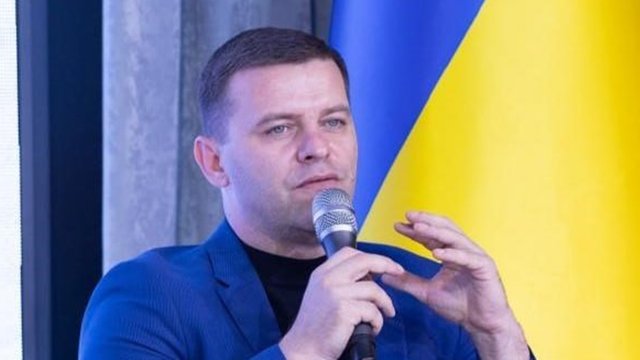
Mykola Filonov, public figure, journalist
The European Commission fined Elon Musk's X platform for violating EU transparency rules. In response, the X administration denied the EC access to the control panel for purchasing and tracking advertising.
These two sentences clearly illustrate the contradiction between social media owners and governments. The former want no one to interfere in the functioning of communication platforms. The latter want them to comply with regulations on the non-dissemination and blocking of criminal content. They also want them to provide access to private information to special services.
The declared principles of advocates of unrestricted communication are confidentiality and freedom of speech.
The motivation behind the actions of those who support the regulation of social media and the accountability of their owners is the fight against crime and destructive propaganda.
At first glance, this story has provided further ammunition to opponents of government interference in the policies of information corporations. The last word seems to have been left to Elon Musk, who showed that he could simply “cut off” Eurocrats from administering the EC's page.
Has the “free market” once again defeated the cumbersome state mechanism?
Such a statement would have been valid if Donald Trump had not joined the discussion, criticizing the EC and stating that “Europe is moving in the wrong direction.” Trump often voices what others only think.
But as is easy to see, the US president did not speak out in defense of freedom of speech as such, but in defense of freedom of speech according to the rules of a social network with which he has close ties. And it is logical that Washington will always support American communication platforms. Thanks to internal legal norms, the “special services” have full access to these platforms.
For the same reason, the Chinese communists defend the “free development” of TikTok, and Moscow concentrates all communication processes and virtual administrative services in the Max app. This is to lock everything into a single matrix.
It is clear that the Chinese special services control TikTok online and use it to try to influence public opinion around the world. The fact that Russian social networks were created specifically to make it convenient for the special services to track the exchange of information is no secret, even to Russians.
And so, in the dispute between the European Commission and X, it was not Elon Musk who won, but “Musk + the US.” And Europe has once again learned that it is quite difficult to influence social platforms with non-imperative “regulation,” no matter how many directives are adopted on this subject. And if at some point the controllers of communication channels (not necessarily social networks) ignore instructions to stop trends in propaganda that are harmful to society for one reason or another, the only way to influence them will be through prohibition. Which, in turn, contradicts the principles of freedom of speech.
Privacy advocates will say that democracy should not allow the creation of a “digital concentration camp” in its own environment. But, unfortunately, the future is not very optimistic for privacy advocates.
No tool or technology can guarantee 100% anonymity today. And if problems periodically arise even for users of closed communication channels, what can be said about applications and networks used by billions?
Cloud technologies and virtual services still “materialize” on specific IT infrastructure and in the form of personalized providers. Therefore, when an ordinary citizen resorts to certain methods of virtual communication, their personalization (if necessary) is only a matter of technology.
Is this unpleasant? Yes, it is. But it will be even more unpleasant when, after hacking into a social network account, attackers gain access to all of a specific person's personal services, including bank cards.
All of the above, unfortunately, also applies to the sphere of propaganda, i.e., influencing human behavior through information methods. A viral video on social media that “hooks” the target audience can cause as much or even more damage than real weapons of war.
The governments of democratic countries are not yet able to effectively counteract this, and therefore resort to fines, bans, blocking, and restrictions. However, the trends in this area are such that various states are moving towards digital autonomy. And if control over communication processes is not exercised by their own, legally defined structures, this niche will inevitably be filled by hostile services.
So far, the situation in Ukraine in this area is far from optimal.
The main reason is that the regulatory framework for social media was formed long before the full-scale war. And the technologies of influence are seriously outdated. That is why our country has been able to respond with varying degrees of effectiveness for several years now, but has not been setting trends.
This problem can only be solved after fully understanding its depth and creating a special state body that would be specifically responsible for communication issues. Without “mixing” this function with culture, telethons, and other areas. And it would use innovative approaches to ensure “soft regulation” of social media.
The time for such actions seems to have come.
