

Mine Action: From Emergency Response to a Sustainable System
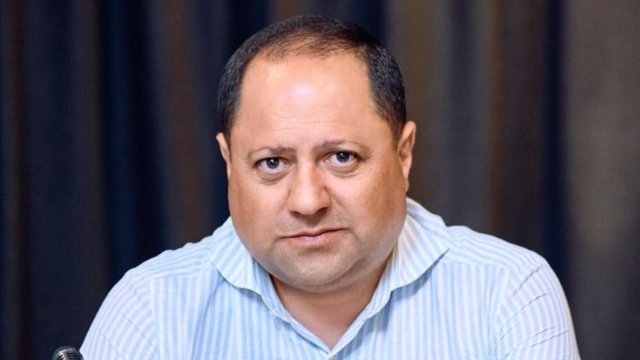
Anushavan Arutyunyan, Chairman of the Board Ukrainian Association for Humanitarian Demining and Recovery
Russia’s full-scale invasion has turned mine contamination into one of the most long-term and complex challenges facing Ukraine. The territory requiring survey and clearance already exceeds 137,000 square kilometers, making Ukraine the most mine-affected country in the world. At the same time, Ukraine’s mine action system, established in 2018–2019, was designed for a fundamentally different scale — approximately 7,000 square kilometers of government-controlled territory and around 9,000 square kilometers of temporarily occupied land.
At that time, humanitarian demining in Ukraine was carried out by a limited number of specialized entities and was perceived as a narrow professional field. Today, mine action has become a critical prerequisite for economic recovery, population return, infrastructure reconstruction, and the revival of agriculture. The system that once functioned adequately no longer corresponds to today’s challenges — let alone those Ukraine will face once areas along the current frontline become accessible for clearance.
Why Change Is Necessary
The Accounting Chamber of Ukraine, in its audit of the effectiveness of humanitarian demining, identified the core problem with exceptional clarity: blurred interagency coordination, significant duplication of functions, and overlapping mandates among government bodies. These systemic shortcomings directly undermine the effective use of both domestic and international resources.
Similar conclusions are drawn in the analytical report “White Paper on Updating the Institutional Architecture of Mine Action in Ukraine” by the Tony Blair Institute for Global Change. Based on interviews with Ukrainian authorities, international partners, and mine action operators, the report — effectively a consolidated position of the entire sector — highlights the complexity of engagement with the Ukrainian government due to the excessive number of state actors involved.
Currently, mine action in Ukraine is regulated by multiple institutions:
the Ministry of Defense, represented by the Armed Forces of Ukraine and the State Special Transport Service;
the Ministry of Internal Affairs, through the State Emergency Service and the National Police;
the Ministry of Economy, Environment and Agriculture; and the Humanitarian Demining Center.
In addition, the Law provides for a National Mine Action Authority — a collective interagency advisory body operating under the chairmanship of the Minister of Defense. Its secretariat functions are performed by a structural unit within the Ministry of Defense. Certification of mine action operators is carried out by units of the Armed Forces, the State Special Transport Service, and the State Emergency Service, resulting in inconsistent enforcement practices.
Such a complex and poorly coordinated system directly affects efficiency. As Ukraine’s international partners have repeatedly emphasized, the absence of a “single entry point” for engagement with the government increases bureaucracy, complicates decision-making, obstructs the development of joint programs, and prevents proper accountability for provided assistance.
Moreover, approximately 40% of all mine action operators are state institutions financed from the national budget. Their significant presence in humanitarian demining creates a systemic imbalance, constraining market development and depriving the sector of the flexibility and dynamism inherent to entrepreneurial models.
In short, the system must be transformed to match the scale of the threat.
International Experience in Mine Action Transformation
Ukraine can draw on the experience of countries that have already faced large-scale mine contamination. However, the goal is not to mechanically copy foreign models, but to understand their logic, strengths, and weaknesses — avoiding past mistakes while adapting best practices to national realities.
After the war of the 1990s, Croatia initially relied almost exclusively on state institutions. For the first three years, demining was conducted solely by government bodies, but it quickly became clear that this approach was costly, slow, and ineffective across large areas. Only later did Croatia open the market to private companies and begin systemic reform. The Croatian Mine Action Centre was established as a key institution responsible for data collection, coordination of operators, standard-setting, and implementation of international approaches. Only after mine-contaminated land was reduced from 13,000 square kilometers to less than 500 was mine action integrated into the civil protection system.
Azerbaijan followed a similar path of institutional clarity and functional separation. Its Law “On Demining Activities” clearly distinguishes between military and humanitarian demining. Mine clearance conducted by the armed forces for defense purposes falls outside the scope of the law, yet its results are incorporated into the national database. This ensures transparency while clearly separating defense and recovery tasks.
Military demining activities in Azerbaijan are coordinated by the government and aligned with the national mine action agency ANAMA, which serves as both coordinator and implementer of humanitarian demining at the national level. This model ensures coherence and systemic integrity.
Where Ukraine Is Headed
Unlike some post-conflict countries, Ukraine avoided the mistake of a “closed model” after the start of the full-scale invasion. From the outset, private operators, international organizations, and technical donors were involved, allowing a humanitarian demining market to begin forming. Today, around 130 mine action operators are active in Ukraine. However, this market is still operating within an outdated administrative framework designed for 16,000 square kilometers, not the 137,000 now affected.
Statistics clearly demonstrate that commercial operators clear the largest share of contaminated land. The sheer scale of contamination necessitates further expansion of this segment, yet progress is constrained by outdated governance, functional allocation, and priority-setting mechanisms.
In 2024, commercial operators cleared 4,642.74 hectares, accounting for 56.6% of all demined land. The State Special Transport Service followed with 1,638.08 hectares (20%), state and municipal enterprises with 1,064.35 hectares (13%), international operators with 614.25 hectares (7.5%), charitable foundations with 205.2 hectares (2.5%), and State Emergency Service units with 37.75 hectares (0.5%).
Thus, the bulk of humanitarian demining is carried out by commercial operators and Ministry of Defense units. However, the primary mission of the latter remains military demining, not civilian land release.
It is also important to note that nearly the entire fleet of mechanical demining machines transferred to Ukraine by international donors — more than 100 units — was allocated almost exclusively to state operators, primarily the State Emergency Service and the State Special Transport Service.
Ukraine now stands at the same crossroads once faced by Croatia and Azerbaijan. We cannot simply replicate their models, but we must study their experience, adapt best practices, and move faster than circumstances dictate.
Ukrainian communities, businesses, the agricultural sector, international investors, and donors all expect transparency, predictability, and efficiency. The challenge before us is unprecedented not only in scale, but in responsibility. Addressing it without updating the institutional architecture of mine action will be extremely difficult.
Ukraine has already embarked on this path.
A New Mine Action Architecture
A draft law to update the outdated Law of Ukraine “On Mine Action” is currently being prepared for registration in Parliament. It is the result of two years of work by the Ukrainian Association for Humanitarian Demining and Recovery in cooperation with partners.
First, the draft proposes the creation of a central executive authority with special status, responsible for forming and implementing national mine action policy. This body would report directly to the Cabinet of Ministers and coordinate interagency and international mine action efforts — in effect, establishing a single authority accountable for mine clearance outcomes in Ukraine.
Second, the draft law introduces a clear distinction between military, operational, and humanitarian demining, with corresponding separation of mandates between the Ministry of Defense, the Ministry of Internal Affairs, and the Humanitarian Demining Center, which would be accountable to the national agency.
Third, humanitarian demining would be formally defined as an economic activity carried out by certified operators. This approach is intended to create a level playing field, stimulate competition, and increase operational capacity.
The updated law should bring order to the system, making it clear, functional, and understandable for international partners.
However, maintaining momentum is critical. More complex territories lie ahead, with higher contamination density and new types of threats. Addressing them requires a strong system capable of planning, coordination, oversight, and quality assurance at every stage.
Mine contamination will remain a challenge for years to come. But today we have a chance to determine how many of those years lie ahead — and how quickly Ukraine can return to normal life, rebuild its economy, and ensure the safety of its citizens.