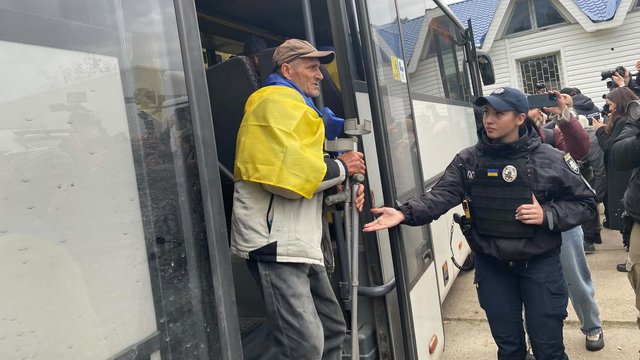
Journalists representing Ukrainian and foreign media outlets spent several hours waiting for citizens who had spent over a day traveling to Ukraine from the temporarily occupied town of Oleshky in Kherson region. As stipulated by the humanitarian mission plan, they traveled from their hometown by bus to Anapa (Russia), then by plane to Belarus, and from there once again by bus to a meeting point in Chernihiv region.
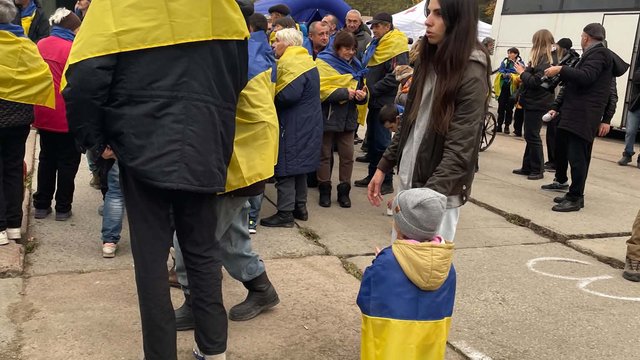
Everything was prepared at the site for the arrival—tents set up by the State Emergency Service (SES), the Ukrainian Red Cross Society (URCS), and charitable foundations, alongside volunteers, hot food, warm blankets, and pet food.
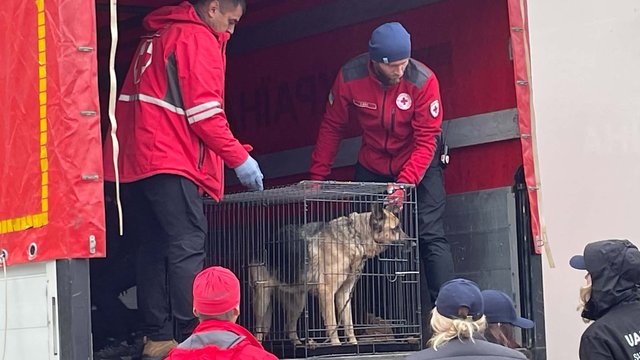
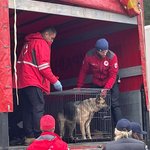
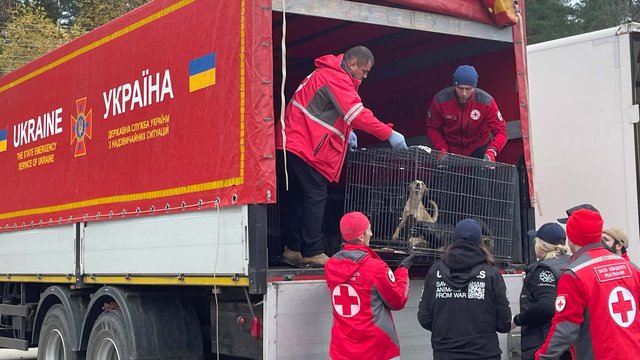
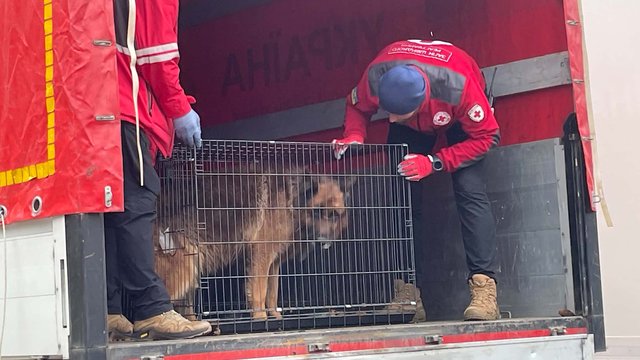
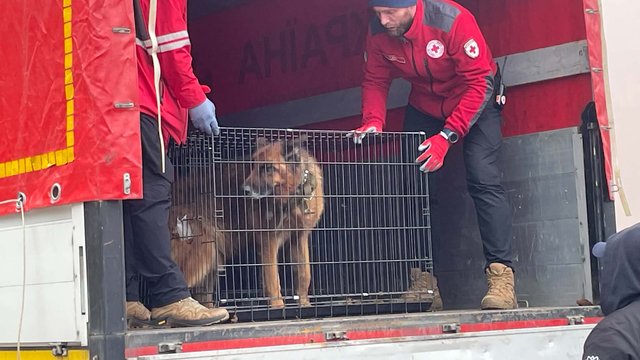
The first vehicle to enter the site was an SES truck, from which the barking, whining, and meowing of animals could be heard. Volunteers immediately transferred the animals, frightened and exhausted by the long journey, into a URCS truck.
"There are approximately 70 animals here. All of them will undergo rehabilitation," a volunteer from the UAnimals animal and environmental protection organization reported.
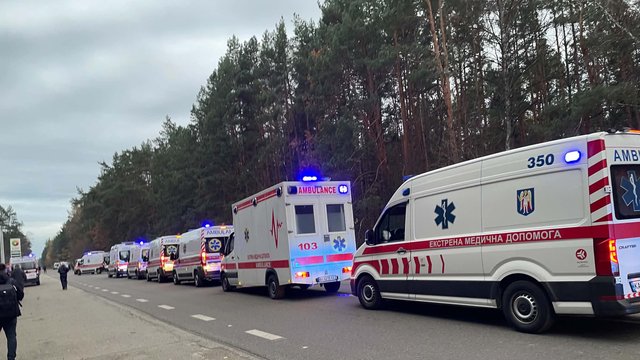
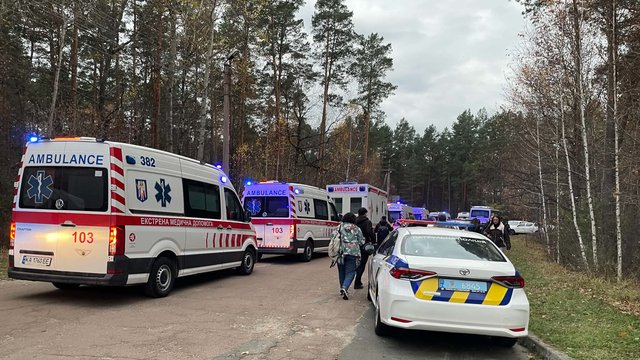
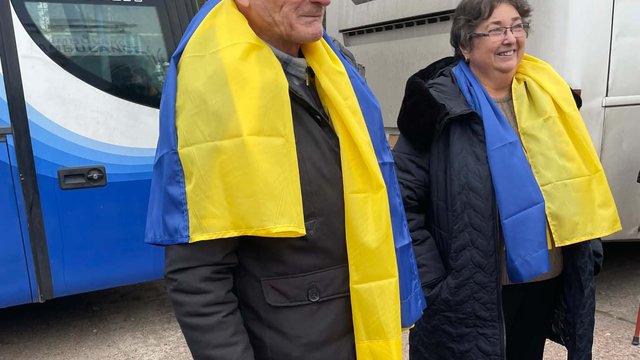
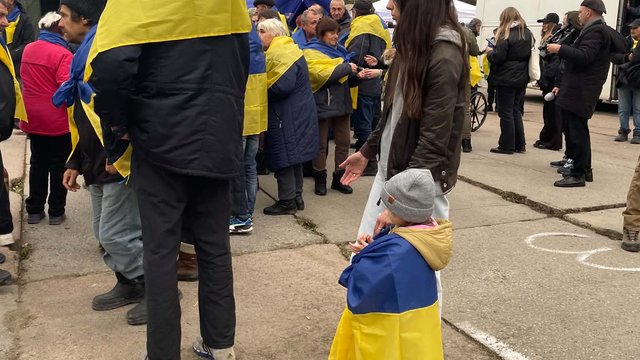
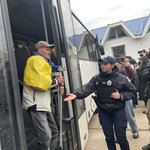
After some time, buses and an extended convoy of ambulances arrived at the site. People stepped out of the buses exclaiming, "Glory to Ukraine!", "My dears!", "We are finally home." Many wept—both men and women. Someone immediately expressed concern for their German Shepherd, checking how it endured the trip before walking over to the URCS truck. Another evacuee recounted how, while still in Oleshky, they managed to coordinate with volunteers to successfully transport dogs across the river using a drone that flew over to Mykolaiv.
Volunteers, medical personnel, and psychologists immediately began assisting the evacuees.
"We took only personal belongings, documents, and photo albums containing our entire lives. And I took my apartment keys... We have nowhere to go..." an elderly woman recounted.
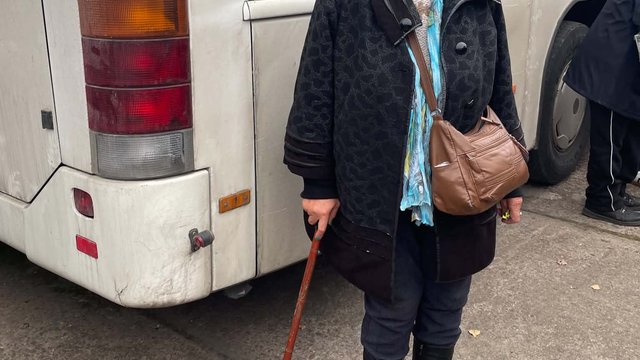

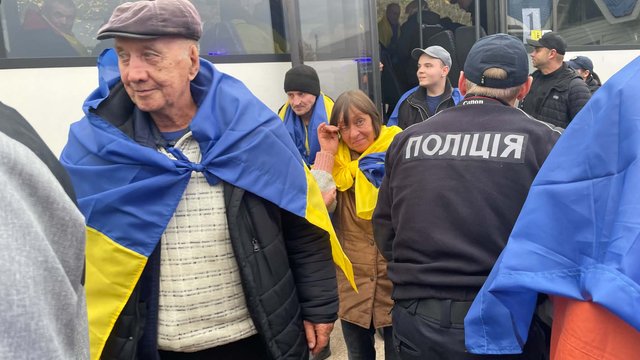
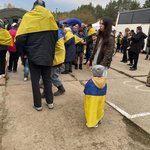
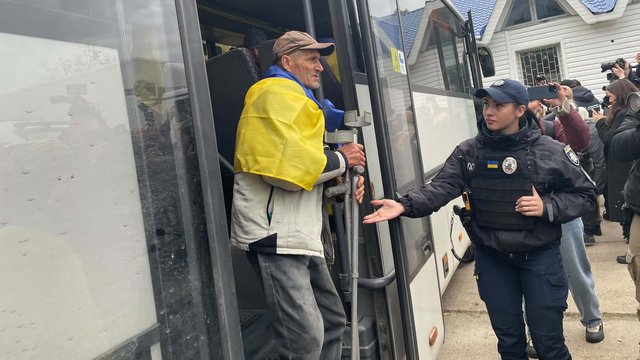
Meanwhile, 72-year-old Ms. Olya, following the mandatory rehabilitation provided to all evacuees, will travel to her children in Odesa.
Every arriving individual holds a distinct story. Nearly all remain uncertain of what lies ahead, and all of them are still mentally rooted in Oleshky.
"I was left alone; my husband passed away, and my son was killed last year. I have a brother living in Vinnytsia region who is inviting me to stay. There is a family house where no one currently lives. It is difficult, but I ultimately decided to leave Oleshky. I said goodbye to my men, so to speak, because I do not know when I will be able to return to visit them at the cemetery," shared another distinguished elderly lady.
The woman noted that food conditions in Oleshky had deteriorated severely since May.
"The younger ones rode bicycles or walked to Radensk. I did not go. Even if they offered me a million, I wouldn't go. I am no longer at an age where I can ride a bicycle," the interlocutor stated.
According to her, they had recently been receiving humanitarian aid drops: "Our people dropped humanitarian aid from large drones. They called those drones 'Baba Yaga'... You do not leave the house at night—blackouts were always enforced—but you hear something drop, and in the morning you check: humanitarian aid, canned goods, stewed meat, grains, pasta... As for vegetables, we grew small amounts ourselves. But crops only grew for those who had access to water and generators."
When asked what she desired most at that moment, she replied: "Sweets. Really, really delicious ones."
An elderly man joined the conversation: "In September, I rode a bicycle 20 kilometers to get food. I hadn't ridden a bike in five years. I am already 79. It took me two hours to get there. I bought 30 to 40 kilograms of provisions. I couldn't ride back loaded like that, so I walked back from Radensk to Oleshky on foot, pushing a bicycle laden with food... It took me six hours of walking. That is how one had to survive."
He added: "And you had to walk with extreme caution because many areas are mined. I nearly lost my life there seven days ago... I was walking home, already very close, when a drone crashed into a lighting pole just a few meters from me. It fell. Smoke filled the air. Breathing was difficult. For a minute, I couldn't see anything... By some miracle, those flying concrete shards from the shattered pole missed me... That was the final straw: I realized I could no longer live there and decided to leave."
Mikhailo Paliy was met upon his return by his family—his wife and two daughters.
"We lived under Russian occupation for two years. Two years ago, when I was 14, my mother, my sister, and I left Oleshky, while my father stayed behind. We evacuated through Russian filtration checkpoints. We were subjected to a four-hour interrogation solely because we lacked Russian documents," Liza Paliy recounted.
When asked how she planned to welcome her father at home in Kyiv, Liza responded: "We bought salo and cooked borscht so he could eat proper, normal food."
"We sincerely hope these humanitarian missions will continue, and that people will be given the opportunity to leave occupied territories safely, without fear or interrogations at Russian checkpoints," the young woman emphasized.
Liza harbors a dream—to visit Crimea. In 2014, the family planned a trip to the peninsula, but the Russian occupation disrupted those plans. The dream remains undiminished. She firmly believes that following the de-occupation of Ukrainian territories, she will certainly travel to Crimea—passing through our Oleshky.
Text and photo - Olena Savchenko