Russian authorities have committed war crimes by deliberately targeting civilian objects, as well as crimes against humanity in the form of other inhumane acts, by carrying out continuous attacks on Ukraine's energy infrastructure, the UN Independent International Commission of Inquiry on Ukraine stated in its new report to the UN General Assembly.
The Commission also concluded that Russian authorities recruited men who were victims of human trafficking in various countries into their armed forces, which constitutes a violation of international human rights law.
The Commission investigated the impact of large-scale attacks by Russian armed forces on Ukraine's energy infrastructure on the civilian population, particularly during the difficult winter of 2025-2026, as well as the cumulative effects of these attacks since the fall of 2022. Over the years, systematic waves of attacks – during which hundreds of drones and missiles were deployed simultaneously – became increasingly frequent and intense, covering an ever-wider area and causing significant damage to Ukraine's energy sector.
The Commission said that last winter, when temperatures plunged to minus 21 °C, millions of people in Ukraine faced prolonged disruptions in the supply of heat, electricity, water, and gas and were forced to live in unbearable conditions.
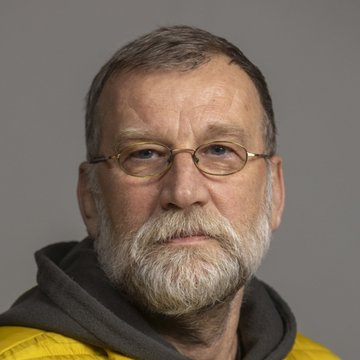
"As a new cold season sets in, the attacks have again intensified and there is serious concern for the life and health of civilians," Commission Chair Erik Møse said.
Prolonged exposure to the cold, lack of access to basic utilities, and the constant need to find ways to survive have significantly affected the physical and mental health of the civilian population, the Commission added.
It is noted that older adults and people with limited mobility have been particularly affected. Due to the risk of getting stuck in an elevator in the event of a sudden power outage, they were unable to go down to shelters during air raid alerts and were forced to remain in unheated homes without electricity or water, lacking access to life-support equipment and basic services.
According to the Commission's assessment, the Russian commanders who ordered the attacks were aware that the heating facilities they targeted in large population centers were vital to the civilian population, especially in winter.
It is noted that Russian authorities officially declared their intention to continue the attacks and referred to plans for carrying them out. The Commission concluded that Russian authorities committed war crimes by deliberately targeting civilian objects.
The evidence gathered indicates that the attacks on Ukraine's energy infrastructure were carried out deliberately, in accordance with a state policy aimed at depriving the civilian population of electricity and other essential services dependent on energy supplies and causing them suffering. The Commission concluded that the Russian authorities committed crimes against humanity in the form of other inhumane acts.
The Commission relied on the testimony of 255 individuals who survived the winter under the conditions described above in Dnipropetrovsk, Kyiv, Kharkiv, Kherson, Mykolaiv, Odesa, Poltava, Zaporizhia, and Zhytomyr regions, as well as on information provided by Ukrainian authorities, doctors, and nongovernmental organizations.
The Commission also examined attacks by the Ukrainian armed forces on energy facilities in the Russian Federation and in the temporarily occupied territories of Ukraine. At the same time, the Commission was unable to investigate the consequences of these attacks in greater detail, as Russia did not grant it access to the relevant territories and did not respond to the Commission's requests for information.
Regarding the recruitment of foreign nationals into the Russian armed forces, the Commission found compelling evidence that Russian authorities engaged in human trafficking involving individuals from 29 countries. Human trafficking was carried out through deception and coercion in collaboration with agents and agencies operating in various countries around the world.
The agents and agencies that recruited men in various countries presented themselves as legitimate companies or government-backed enterprises. They arranged visas and travel documents for groups of recruits and, in some cases, accompanied them during the trip.
It is noted, however, that shortly after their arrival, they were forced to sign contracts with the Russian Ministry of Defense, drafted in Russian. The commission noted a high level of coordination between agents operating in various countries around the world and the Russian authorities.
The men were sent to the front lines in Ukraine and tasked with carrying out dangerous missions. Many of them were killed or went missing; others voluntarily surrendered or were captured by the Ukrainian armed forces and were granted prisoner-of-war status.
The Commission reiterates that international law prohibits attacks on the civilian population and civilian objects, and calls for an end to such attacks.
The Commission calls for the release from the Russian armed forces of all individuals who have been victims of human trafficking.
The UN Independent International Commission of Inquiry on Ukraine is an independent body mandated by the UN Human Rights Council, in particular, to investigate all alleged human rights violations and abuses, as well as violations of international humanitarian law and related crimes, in the context of the Russian Federation's aggression against Ukraine. The Commission consists of Erik Møse (Chair), Pablo de Greiff, and Vrinda Grover.