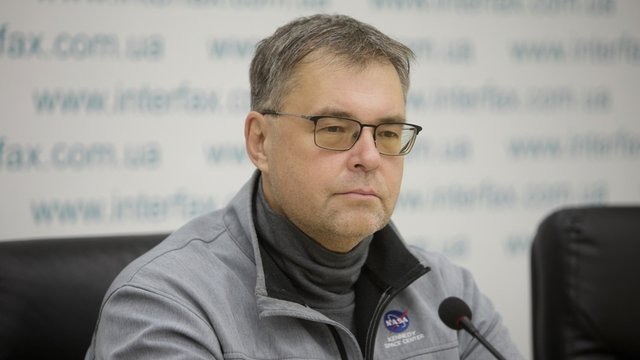
Kyiv has already commissioned approximately 85 MW of generating capacity, which will help the city get through the fall-winter period of 2026/2027, while preparations for winter under the concept provisionally dubbed "dark but warm" are approximately 80% complete, Managing Director of the Energy Industry Research Center Oleksandr Kharchenko said.
"During the off-season, Kyiv has essentially already commissioned approximately 85 MW of capacity, which is a fairly good pace. Kyiv has also managed to arrange backup power supplies for all critical infrastructure to ensure its basic operation," Kharchenko said during an online discussion on the special topic "Survival Mode: What Will Help Kyiv and the Region Get Through This Winter?" hosted by the Centre for Economic Strategy on Thursday.
According to him, this means that some residential buildings in certain parts of Kyiv may have no water, but water will continue circulating through the system; there simply will not be enough pressure to pump it up into the buildings.
Kharchenko said reserves had also been created to ensure that sewage systems and heating continued to operate.
He said that Kyiv's winter preparation concept was provisionally dubbed "dark but warm" and was approximately 80% complete.
At the same time, the Energy Industry Research Center director added that approximately 5,000 buildings equipped with backup heating supplies would be able to maintain indoor temperatures of plus 10–14 degrees Celsius when outdoor temperatures fall to minus 5–10 degrees Celsius. This, he said, is much better than having no heating at all. Kharchenko previously said that 3,000 buildings in the capital have no backup heating supplies and are at risk.
"I try to be as objective as possible, and I believe that Kyiv is now one of the best-prepared cities for winter in the face of attacks. If we had made investments and worked at the same pace over the past four years, we would now be able to watch Russian ballistic missiles fly overhead without worrying about our critical infrastructure. I am genuinely angry because this was not done a couple of years ago," the expert said.
At the same time, he expressed the view that western Ukraine had prepared significantly less effectively for the season because of an "underlying feeling that things were calm here."
"These drones pose a significant threat to many relatively small cities where, unfortunately, the level of preparedness is lower than, say, in central or eastern Ukraine. Mykolaiv, which has prepared and has significantly better-protected critical infrastructure than many cities in western Ukraine, could unexpectedly find itself in a better situation than, for example, Ternopil or Khmelnytsky," the Energy Industry Research Center director said.
He added that these areas would still face fewer shelling attacks, but "in terms of water supply and heating, Kyiv may sometimes be more comfortable."
As reported earlier, Kharchenko said that by the New Year, Kyiv would have approximately 200 MW of gas-fired cogeneration capacity, "which will ensure the operation of the water utility and heating systems."