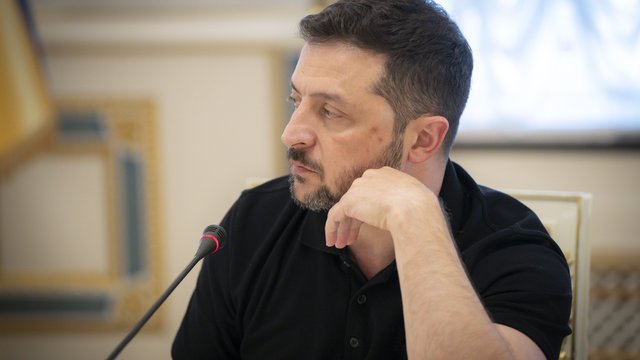
The percentage of irrecoverable losses among Russian troops in certain sectors of the front has reached 74% in recent days, commander of the National Guard of Ukraine, Brigadier General Oleksandr Pivnenko said, following a visit to units carrying out combat missions from Kharkiv to Kherson regions.
"We are neutralizing the enemy's numerical superiority and conducting carefully planned operations that strengthen the front. Over the past few days, the enemy has suffered record casualties, with irreparable losses in certain sectors reaching 74%. This is the price Russia is paying for the war it started against Ukraine," Pivnenko said on Facebook on Thursday.
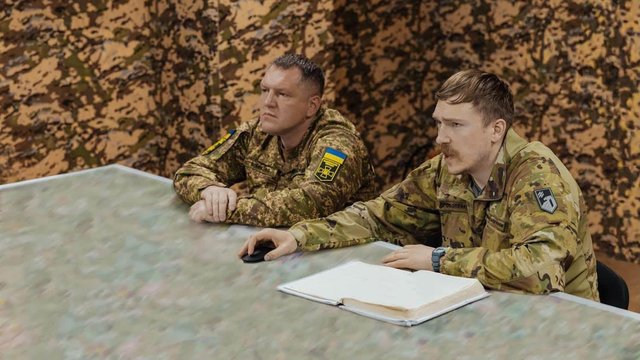
He cited Operation "Veles" in Kupiansk direction as one example of how Ukrainian units have offset the enemy's numerical superiority through planned operations; during this operation, units of the National Guard's second Corps "Khartia," together with other components of the Defense Forces, combined an underground assault, surface operations, and drone operations to prevent Russian troops from advancing into the rear of Kupiansk in Kharkiv region. During the operation, more than 30 Russian soldiers were taken prisoner, and the enemy's total losses exceeded 100 personnel.
In Donetsk region, the Azov military group continues to hold designated lines. "The daily combat operations of our fighters on this extremely challenging front refute the Russian command's claims about the encirclement and capture of Dobropillia, as well as the occupiers' advances and successes," Pivnenko said.
The commander of the National Guard said that in Kherson region, he visited the 21st Separate Brigade, where he received briefings on the situation, logistics, and supplies, and in Kryvy Rih, Dnipropetrovsk region, he inspected sites that could be used to expand the training base and train military personnel.
As previously reported, the Defense Forces under the command of the National Guard's second Corps "Khartia" broke the stalemate on Kupiansk front and carried out the next phase of the liberation of Kharkiv region as part of the underground operation "Veles," during which more than 15 kilometers of underground tunnels were dug behind enemy lines.
"The Russians believed that underground tunnels were their exclusive tool for bypassing our defenses. We studied their experience, outmaneuvered them on their own turf, and turned this threat into our counteroffensive advantage," emphasized Brigadier General Ihor Obolensky, commander of the second Corps of the National Guard of Ukraine "Khartia."