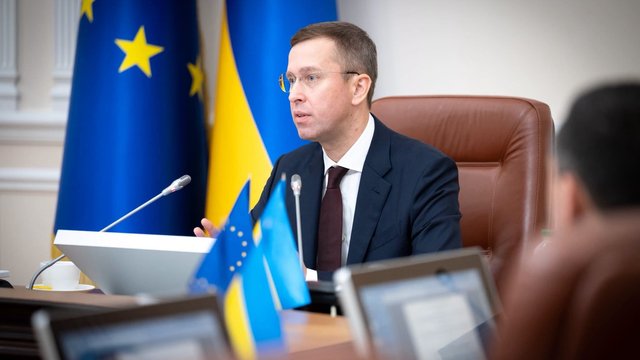
Ukraine’s anti-corruption agencies require faster access to evidence, joint investigative teams, assistance in the seizure and recovery of assets, and international legal cooperation regarding extradition, emphasizes Oleksandr Klymenko, Head of the Specialized Anti-Corruption Prosecutor’s Office (SAPO).
On Tuesday, the SAPO reported via its Telegram channel that its head had spoken at the inaugural International Anti-Corruption Forum (IACF 2026) in Bucharest, Romania.
According to the SAPO, the forum, initiated by Ukraine with the support of the EU Anti-Corruption Initiative (EUACI), brought together approximately 100 anti-corruption experts, including 75 international representatives from 32 countries and various international organizations.
The message notes that Klymenko presented the results of the work carried out by the SAPO and the National Anti-Corruption Bureau of Ukraine (NABU), and outlined key areas for international cooperation essential for investigating high-level corruption and recovering assets.
"Corruption cases often transcend national borders. Funds flow through foreign companies, assets are held abroad, and suspects may leave Ukraine. We need faster access to evidence, joint investigative teams, assistance in the seizure and recovery of assets, international legal aid, and cooperation on extradition matters," the SAPO head is quoted as saying.
Klymenko emphasized that, during a full-scale war, the fight against corruption helps preserve resources vital for the state’s defense and resilience. "Abuses in the defense procurement sector deprive the military of essential supplies, while corruption in the energy sector creates additional risks amid Russian attacks," the message notes.
According to the Specialized Anti-Corruption Prosecutor's Office (SAPO), despite the challenges posed by the war, anti-corruption institutions continue to secure court rulings. In the first nine months of 2026, 86 convictions, involving 116 individuals, arising from cases brought by the National Anti-Corruption Bureau of Ukraine (NABU) and the SAPO entered into legal force.
Furthermore, as the SAPO points out, Klymenko emphasized the importance of the independence of anti-corruption bodies, noting that the ability to make decisions based solely on the law and evidence is a prerequisite for achieving further results.