A national survey of Ukrainian residents showed that 31.2% of respondents met the criteria for post-traumatic stress disorder (PTSD) or complex PTSD (CPTSD), according to the results of a study published by British academic publisher Taylor & Francis Group in the European Journal of Psychotraumatology.
"High rates of both lifetime and war-related trauma were documented. The national prevalence of ICD-11 PTSD was 25.2%, with an additional 6.0% of respondents meeting criteria for ICD-11 CPTSD, yielding a combined prevalence rate of 31.2%," the publication says.
The collected data reflects the state of mental health at the time of the survey rather than the dynamics of symptom changes over time. The article material was received by the publisher in 2025.
Factors associated with a higher likelihood of developing PTSD or CPTSD included female sex, older age, lower education level, prior military service, forced displacement due to war, as well as a higher number of lifetime traumatic events and war-related stressors.
Loneliness was the only factor specifically associated with CPTSD rather than PTSD.
Study co-author, clinical psychologist Emma Facer-Irwin, noted that the fact that PTSD occurred much more frequently than CPTSD may indicate that psychological responses to an ongoing war do not always fit neatly into models developed in post-conflict settings. "When the threat remains current and unpredictable, the ways of experiencing and adapting to traumatic stress may differ, representing an important area for future research," she indicated.
Lead author of the study, lecturer and researcher in forensic mental health at King's College London (KCL), Deirdre MacManus, noted that the vast majority of those surveyed experienced multiple traumatic events during their lifetimes, and many were also directly affected by the ongoing war through forced displacement, loss of loved ones, destruction of their communities, or anxiety for family members, with many Ukrainians continuing to face stressors in daily life. "Despite this, many Ukrainians continue to live and adapt under extraordinarily difficult circumstances," she noted.
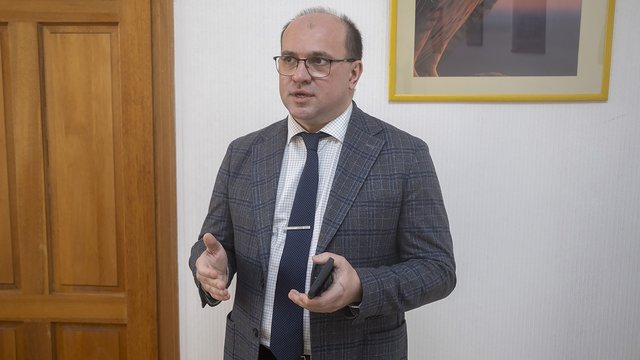
Study co-author, professor at the Department of Social Sciences at the Kyiv School of Economics Volodymyr Kulyk, noted that PTSD and CPTSD affect not only veterans or people who were near active combat zones. "These disorders are also common among other population categories severely affected by the war—including internally displaced persons, people who have experienced missile and drone attacks on their cities and towns far from the front line, as well as those caring for injured or traumatized individuals," he stressed.
According to Kulyk, further research will be necessary to understand how the psychological impact of war evolves among the general population as the conflict continues.
In addition to specialists from KCL and the Kyiv School of Economics, the research team included scientists from George Washington University, the University of Manchester, the Centre for East European and International Studies (ZOiS), and Combat Stress—a leading British charity caring for veterans' mental health. The study was initiated by the research network "Conflict and Cooperation in Eastern Europe" (KonKoop), led by Professor Gwendolyn Sasse (ZOiS), and funded by the German Federal Ministry of Research, Technology, and Space.
The study was conducted via telephone interviews based on a random sample of 2,504 respondents in government-controlled areas of Ukraine. The relationships between the type and number of lifetime and war trauma exposures and PTSD/CPTSD status were examined using a series of logistic regression models adjusting for age and sex. The sample is representative by age, sex, marital status, education level, macro-region, language, and ethnicity.
Prior to field work, questionnaires were pre-tested on an approximately representative sub-sample (n = 20) of the target group (adults residing in urban and rural settlements of Kyiv and nine regions of Ukraine). During data collection, interviewers had the opportunity to ask questions and consult with a psychologist regarding complex cases. The average duration of an interview was 27 minutes.