The European Union expresses regret over the so-called "diesel deal" between US President Donald Trump and Kremlin leader Vladimir Putin, noting that this is not the first time differences have arisen between Europe and the United States regarding the war Russia is waging against Ukraine. Dialogue will continue.
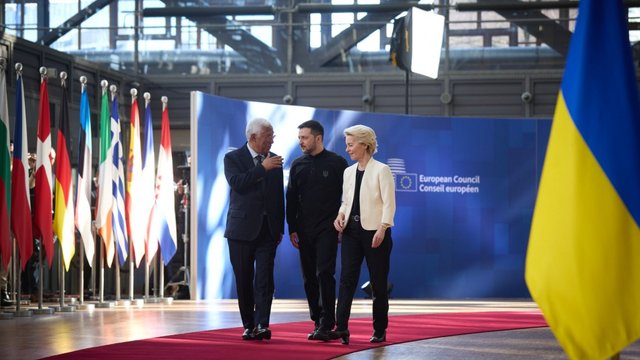
A European diplomat informed journalists in Brussels on Tuesday on the eve of the European Council meeting scheduled for October 15-16 in Brussels—where continued support for Ukraine in standing against Russian aggression will be among the agenda items—answering a question on whether European Council President António Costa intends to raise this issue for discussion among EU leaders.
"Regarding the announced deal: we consider it regrettable, we regret its conclusion. It contradicts the strategy we have followed over the past four and a half years, which involves not only pressure on Russia, but also rejection of Russian energy sources—and not just fossil fuels," he said.
Demonstrating the dynamics of phasing out Russian fuel, the source noted that in 2021 Russia's share in imports of fossil fuels—both oil and gas—dropped sharply. "Regarding oil, we went from a level of around 45% of imports to 12% today, so the reduction is obvious. And thanks to full implementation of the REPowerEU strategy, we plan to completely sever this connection. Regarding gas, the figure dropped from 26% to, I believe, 2%. So I repeat: this is a European strategy," he stated.
The diplomat noted that such measures are "not only a way to stop Russia from funding its war machine, but also a means of pressure on Russia to stop this war."
At the same time, he drew attention to the fact that the agreement announced by US President Donald Trump with Russia is "not the first time we have had differences with the US regarding the war in Ukraine." "The experience of recent years—and certainly the period following President Trump's taking office—shows that dialogue with the US does not always lead to full agreement on the vision of the situation between the European Union and the United States, but such dialogue is in any case better than its absence. We have also seen many cases where, thanks to this dialogue, the US changed its position or the positions of the parties moved closer together. Therefore, in my opinion, such practice should continue; it is a completely natural and necessary process," he expressed confidence.
The diplomat emphasized that all EU leaders "share a common position regarding the situation in Ukraine." For this reason, according to him, it makes no sense for European Council President Costa to "singling out this specific moment." "I think the European Council will express regret over this [Trump-Putin deal] decision," the journalists' interlocutor added.