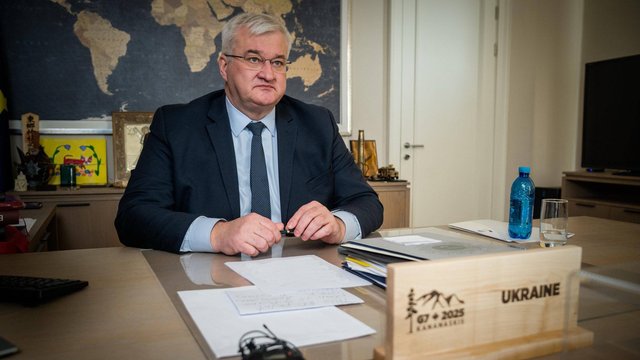
Ukrainian Foreign Minister Andriy Sybiha, commenting on reports of a possible plague outbreak in Irkutsk, called on Russia to disclose all information regarding the incident.
"What is Russia hiding in Irkutsk? On October 2, 28-year-old Daria Shipilova died at Shelekhov District Hospital. She worked at the Irkutsk Anti-Plague Research Institute of Siberia and the Far East. Soon after her death, reports began circulating in the Irkutsk region that she had died of pneumonic plague," the minister said on X.
He said that nearly 200 people who had been in contact with Shipilova were isolated and placed under medical observation, and quarantine measures were implemented in several hospitals in Irkutsk.
Sybiha said Russia has a long history of concealing the truth: the 1979 anthrax leak in Sverdlovsk; the 1986 Chornobyl disaster; the true scale of COVID-19 in 2020-2022.
"Each time, the consequences were devastating. There is credible evidence that Russia has used chemical weapons in Ukraine. It also threatens to use nuclear weapons in its genocidal war. The world must not wait for another catastrophe before asking questions," the foreign minister said.
He said Russia must disclose all the circumstances of this case, provide transparent epidemiological data, and cooperate with international mechanisms.
"When dangerous pathogens are involved, secrecy is a threat to everyone," the statement reads.
On October 6, the Public Health Center of the Ukrainian Ministry of Health said it is monitoring reports of a suspected particularly dangerous infection in Irkutsk region and currently considers the risk to Ukraine to be very low.
Plague is an acute bacterial infection caused by Yersinia pestis. The natural reservoir of the pathogen is primarily small mammals, and transmission to humans can occur through bites from infected fleas, direct contact with infected tissues or materials, or – in the case of the pneumonic form – through infected respiratory droplets.