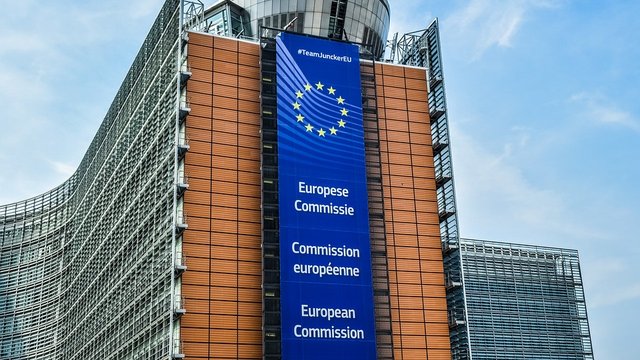
The European Commission announced on Tuesday that it had adopted a package of documents regarding policy reviews in the context of future enlargement, having defined strategic guidelines and measures necessary to prepare the Union for the admission of new members.
According to the statement, the proposed measures aimed to prepare the Union's governance system, policies, and budget for enlargement while simultaneously strengthening the protection of the Union's values and the rule of law.
Commenting on the measures, European Commission President Ursula von der Leyen stated that Europe's future depended on choices made that day, calling enlargement a geopolitical imperative. She noted that foundations were being laid to ensure a larger Union would also be stronger, more resilient, and effective, remaining firmly based on shared values and rules. She added that as aspiring countries advanced in their reforms, the Union had to be ready to welcome them by preparing institutions, adapting policies to new realities, and ensuring that the budget reflected shared ambitions.
The explanatory notes accompanying the package noted that it presented an in-depth analysis of EU policy in light of future enlargement, outlining how current legal frameworks and future accession treaties could be utilized to prepare the Union for an increased number of member states. The package also proposed safeguards for future accession treaties, including enhanced sectoral safeguards and a new institutional protection clause, to guarantee the stable implementation of commitments undertaken during and after accession negotiations.
Additionally, the package strengthened the gradual integration process by making it more coherent, structured, and predictable. The report detailed that such an improved process would help prepare candidate countries for membership through their participation in individual EU policy areas prior to accession, subject to fulfilling relevant requirements. This would build administrative capacity, increase readiness, and provide tangible benefits for citizens and businesses in both the EU and candidate countries before formal membership.
At the same time, the Commission emphasized that participation in the process would continue to be based on achievements, remain conditional and revocable, and depend on policy readiness and strategic coherence. The Commission noted that the document package would serve as the basis for strategic discussions among member states regarding enlargement and reforms at the October European Council meeting, as well as a guide for cooperation with the European Parliament and the Council concerning necessary institutional and operational changes.
Regarding policy adaptation for an enlarged Union, the press release stated that the reviews indicated the Union could admit new members within the framework of current Treaty provisions and accession treaties. The Commission explained that regardless of the policy area, the most critical requirements for both the EU and candidate countries were administrative capacity and the ability to ensure practical implementation. Until accession, professional skills, regulatory and supervisory capacities had to be strengthened, system compatibility ensured, and inter-agency cooperation established.
Regarding budgetary aspects, the policy reviews confirmed that the Union's budget was capable of financing new member states while continuing to support existing priorities. The press release detailed that under the proposal for the next Multiannual Financial Framework for 2028-2034, candidate financing prior to accession would occur through Global Europe instrument, transforming after accession into funding within national and regional partnership plans, supplemented by resources for cohesion policy, agriculture, internal affairs, and the Interreg program.