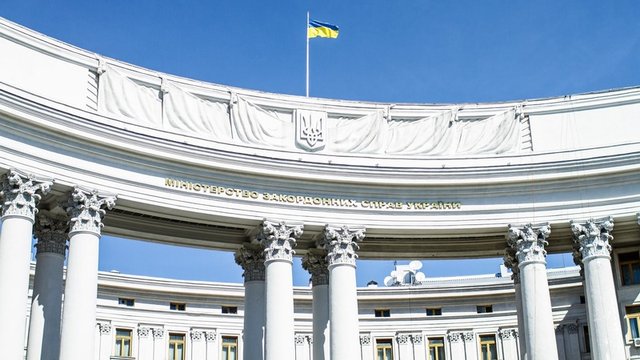
The Ukrainian Embassy in Kazakhstan has appealed to the Kazakhstani authorities not to grant Russia's request for the extradition of Ukrainian citizen Liubov Rozhanska, who was detained in Astana, the press service of the Ukrainian Ministry of Foreign Affairs told reporters.
"The Ministry of Foreign Affairs is aware of this situation. Immediately after receiving information about the citizen's detention upon her arrival in Astana, the Ukrainian Embassy in Kazakhstan promptly appealed to the Kazakhstani side, asking it not to grant Russia's extradition request," the statement reads.
In addition, Ukrainian consular officials requested permission to visit the citizen, who is currently being held in a pretrial detention center, and received preliminary approval. It is noted that Ukrainian diplomats are also in contact with the victim's attorneys and are providing the necessary assistance.
"We are counting on the Kazakhstani side to fairly consider the circumstances of the situation and are working to protect the legitimate rights and interests of the detained Ukrainian citizen," the ministry said.
The Ministry of Foreign Affairs, the Department of Consular Services, and the Ukrainian Embassy in Kazakhstan are closely monitoring the situation.
As previously reported, on October 1, at Astana Airport, Ukrainian citizen Rozhanska was detained at Russia's request; she had arrived to pick up her grandson, who was to be transported there from Russia.
According to media reports, a criminal case has been opened against the Ukrainian woman in Russia in connection with the alleged abduction of a child.
In 2021, the boy's mother, Alla Andreieva, left Odesa with him and moved to Kaliningrad region of Russia. The family of her second husband, a Russian citizen, lived there.
In March 2022, Andreieva filed a statement with the Russian Ministry of Internal Affairs renouncing Ukrainian citizenship for herself and her child. That same year, they received Russian passports. Later, the boy's father obtained a court order through a Ukrainian court establishing that his son would reside with him in Odesa.
In July 2026, according to the lawyer, the child's mother's new husband, Vitaliy Andreiev, and his father, Viacheslav, offered Rozhanska the opportunity to take the boy and hand him over to his Ukrainian father.
DW notes that in late August, the parties were negotiating the child's handover. At the same time, a criminal case against Rozhanska was already underway in Russia. The Central District Court of Kaliningrad, at the request of the FSB, ordered the Ukrainian woman to be taken into custody. According to her lawyer, while negotiations regarding the boy's return were ongoing, the Russian FSB was preparing documents to issue a warrant for Rozhanska's arrest and her subsequent extradition to Russia.
The lawyers warned the woman that a trip to Kazakhstan could be dangerous. However, Rozhanska was very attached to her grandson and decided to travel to Astana anyway. Upon arrival, she was detained at the airport.