Corruption in government and massive Russian strikes are among the issues concerning Ukrainians the most as of September 2026, according to the results of a poll conducted by Kyiv International Institute of Sociology (KIIS).
"Most respondents stated that they are concerned about corruption in government (50%) and massive missile and drone strikes (40%). Among other top concerns are: unprofessionalism and incompetence of the authorities (30%), low salaries, pensions, etc. (28%), the activities of territorial recruitment centers (24%), rising prices (23%), and the situation at the front (21%). Other problems were mentioned less frequently," the survey report published on Monday states.
The survey notes that a total of 53% chose either "massive missile and drone strikes" or "the situation at the front" (or both), meaning that war as a factor of concern is on par with corruption. Meanwhile, a total of 64% chose either "corruption in government" or "incompetence of authorities." Thus, when comparing the overall factor of war versus general dissatisfaction with the authorities due to corruption or incompetence, the latter was mentioned somewhat more frequently.
At the same time, the vast majority of respondents – 72% – believe that the level of corruption in the country has increased during the full-scale invasion. Those who note a decrease make up 6%, while the rest either believe it has not changed or could not answer.
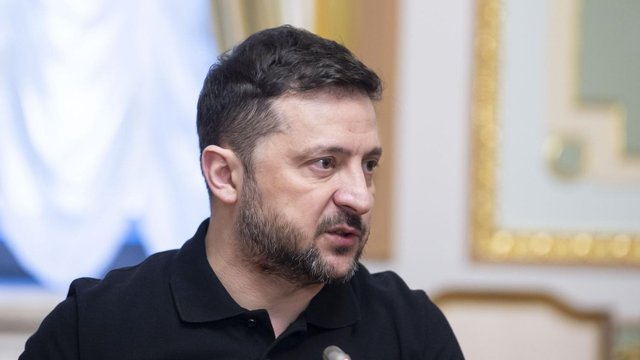
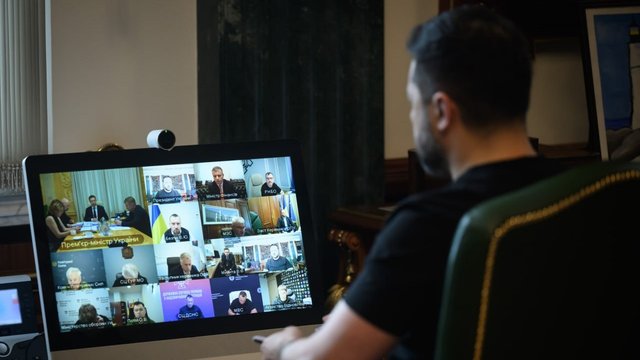
Respondents were also asked whether President of Ukraine Volodymyr Zelenskyy bears personal responsibility for the corrupt actions of his entourage.
"The majority of Ukrainians – 72% – assert that President Volodymyr Zelenskyy bears personal responsibility for the corrupt actions of his entourage. Those who believe he does not bear responsibility account for 25%," the report says.
It is noted that even among those who "completely trust" Zelenskyy, every fifth person either doubts (16%) or holds the president responsible (3%). The share is even higher among those who "tend to trust" him (although 60% still answer that he bears no responsibility). Meanwhile, among those who "tend not to trust" him, 57% consider him responsible, but nearly half either doubt (23%) or consider him not responsible (19%). Only among those who "completely distrust" him does certainty in his responsibility dominate (85%).
Commenting on the poll results, KIIS Executive Director Anton Hrushetsky noted that in April 2026, when asked about the greater threat to the country, 54% chose corruption and 39% chose the Russian invasion. Because the issue of corruption is constantly part of public discussion and surveys, KIIS reiterated its commentary from April 2026, which remains relevant today.
"The issue of corruption remains an extremely strong trigger, especially for a psychologically exhausted society. As we have shown, when we ask an open-ended question, people recognize the truly existential risks of war and name it as the biggest challenge. However, when we directly read out the word 'corruption' to respondents, it triggers strong emotions and stereotypes (often 'clouding' any rational view). Objectively, this is a mistaken outlook (that corruption poses a greater threat than war), because the war waged by Russia aims to wipe Ukraine and Ukrainians off the face of the earth, this is a risk of the destruction of the entire Ukrainian nation," Hrushetsky emphasized.
He noted that currently, the Ukrainian authorities lack sufficient public trust to treat the issue of corruption as secondary or as something that can "wait" until the end of the war. Therefore, adequate communication from the authorities demonstrating a genuine commitment to fighting corruption is an urgent necessity.
"At the same time, other actors must also realize the importance of the context and the narrative we 'promote' regarding corruption. Our goal must be the long-term building of institutions and societal development that minimizes manifestations of corruption (since it is utopian to expect corruption to be defeated in a short period, or to be completely eradicated altogether). Along this path, many high-profile investigations await us, but the fight against corruption must not be reduced merely to bursts of hatred in social media toward specific personalities. Furthermore, anti-corruption activities (particularly in their media dimension) must adhere to the principle of 'do no harm to defense.' There is no sense in a passionate fight against corruption if it turns into writing memoirs abroad after a military defeat. Moreover, we remind you that the Russian enemy knows the vulnerabilities of Ukraine's information security very well. The issue of corruption is one of the most sensitive ones (alongside mobilization and a few other topics), so Russians gladly use it in attempts to undermine Ukraine from within," he summarized.
The poll was conducted from September 12 to 21, 2026, using computer-assisted telephone interviews (CATI) based on a random sample of mobile phone numbers across all regions of Ukraine controlled by the Ukrainian government. A total of 1,000 respondents aged 18 and older were interviewed. Under wartime conditions, the formal sampling error does not exceed 4.1% for indicators close to 50%, 3.5% for 25%, 2.5% for 10%, and 1.8% for 5%, alongside certain systematic deviations associated with wartime polling.