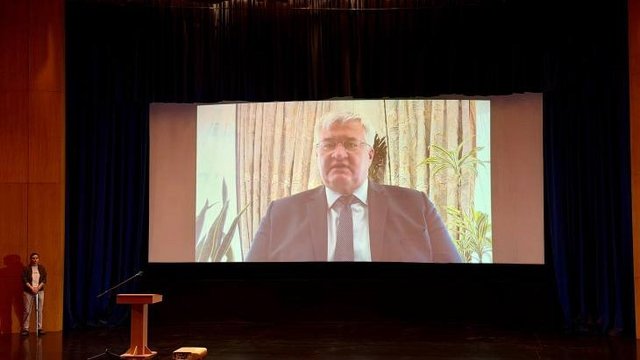
Russia systematically uses cognitive tools not only against Ukraine but also against its allies, Foreign Minister Andriy Sybiha said at the Cognitive Influence and Resilience Forum.
According to a statement by the MFA's press service on Telegram on Friday, the forum was organized by Victory Neurones and focused on developing Ukraine's capabilities in the cognitive domain, strengthening societal resilience, engaging with international partners, and shaping Ukraine's image abroad.
According to the minister, Russia systematically uses cognitive tools not only against Ukraine but also against its allies. The aggressor state flexibly adapts hostile narratives to the specific characteristics of particular societies. In particular, it exploits political divisions in Europe and the United States, manipulates historical memories of colonialism and the Soviet legacy in Africa, Asia, and the Middle East, as well as distrust of the West in Latin American countries.
Sybiha drew particular attention to Russia's attempts to destabilize Europe and its increasingly active shift toward direct attacks. "We are seeing Russia increasingly resort to kinetic actions. It is already waging war against the West. Not a hybrid war. Explosives in drones are not hybrid," he said.
Cognitive influence, the minister noted, is also aimed at emotional exhaustion and spreading fear. According to the head of the foreign ministry, over the years of full-scale war, Ukraine has gained significant experience in countering cognitive threats and, at the same time, has shifted to proactive measures – in particular, in shaping its own international positioning.
"We have changed the perception of our state. The world recognizes Ukraine's new role – as a security partner. Not a supplicant, but a provider of security," the minister said.
Sybiha said an important component of a state's cognitive capacity is its ability to engage with foreign societies, build trust, and shape its own agenda. Ukrainian diplomacy plays a special role in this. According to the foreign minister, diplomatic missions operate directly within the environments where decisions regarding Ukraine are made. They serve as a platform for setting the agenda, building trust, engaging with foreign societies, and representing Ukraine abroad.
"A modern diplomatic mission is no longer merely a channel for conveying an official position. It is the state's sensory organ, which must understand the local environment and promptly identify changes, risks, and opportunities. That is precisely why developing the cognitive capacity of diplomacy is not merely a matter of communications. It is a matter of our ability to understand the world in which we operate and to effectively defend Ukrainian interests," the minister said.
He also highlighted the strategic importance of the Ministry of Foreign Affairs' updated Communications Strategy for 2026-2030. The document establishes external communications not merely as a tool for informing the public, but as an integral component of national resilience. The strategy introduces the concept of cognitive influence into professional discourse and envisions a coordinating role for the Ministry of Foreign Affairs in the field of external communication.
Finally, Sybiha emphasized the need for proactive and asymmetric measures in cognitive confrontation – primarily the use of creative approaches and ridiculing the aggressor.