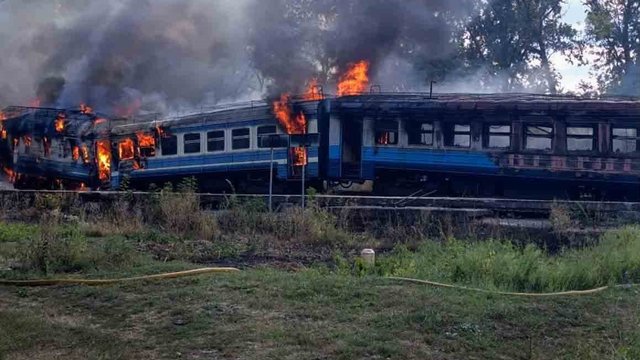
Russia continues systematic attacks aimed at disrupting logistics across Ukraine, Foreign Minister Andriy Sybiha said.
“Last night, another locomotive was directly hit in a Russian strike on railway infrastructure near the Polish border in Ukraine’s Volyn oblast. Since the start of the full-scale invasion, over 500 locomotives have been damaged or completely destroyed by Russian attacks - more than half of them this year alone,” Sybiha said on X.
He emphasized that the Ukrainian railway keeps the country moving. It enables the rapid evacuation of civilians from frontline areas, the transport of essential cargo, and the shipment of grain and other vital goods across the country.
“Amid daily attacks on our railway, it has become a key system for economic and social stability of the Ukrainian people and cities. To keep this lifeline running, Ukraine urgently needs replacements. We call on all our partners to urgently assist us in finding locomotives compatible with the 1520 mm gauge as well as in financing to accelerate the procurement of new ones. Supporting Ukraine’s railway resilience will help avert a humanitarian crisis and strengthen our resilience under the challenging conditions of full-scale war,” Sybiha urged, adding that supporting the resilience of the Ukrainian railway system would help prevent a humanitarian crisis and strengthen Ukraine's resilience amidst the challenging conditions of the full-scale war.
As reported, 209 locomotives belonging to JSC Ukrzaliznytsia were damaged as a result of Russian attacks throughout 2025 and the first quarter of 2026.
Before the war, in April 2021, the company operated 1,532 locomotives, comprising 749 electric and 783 diesel units. Held in reserve were 222 electric locomotives (109 freight and 113 passenger) and 223 diesel locomotives (66 for freight trains, seven for passenger service, and 150 shunting locomotives).