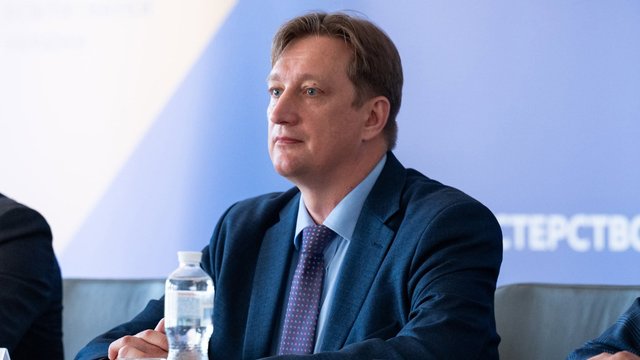
The Ministry of Education and Science of Ukraine recommends that schools use three basic models for organizing the educational process—face-to-face, combined, and remote—amid prolonged and repeated air raid alerts, Minister of Education and Science Andriy Butenko has reported.
"The main principle remains unchanged: the safety of children and teachers comes above all. At the same time, we must do everything possible to ensure that children have as many learning opportunities as possible despite the alerts, because every lost hour ultimately affects the quality of education," Butenko wrote on Facebook.
According to him, last week, together with teachers, parent organizations, school principals, and education administration heads, recommendations were developed for organizing the educational process in general secondary education institutions during prolonged and repeated air raid alerts. The recommendations were officially sent to the regions to help schools determine their operational procedures in advance under various security conditions.
According to the guidelines, schools can use face-to-face, combined, or remote learning models and switch between them dynamically depending on the security situation and the capacity of a specific institution.
The framework also defines the procedure for organizing the school day if an air raid alert is active at its start, as well as actions in the event of power or communication outages.
In particular, if a shelter is equipped for conducting classes, the educational process can continue there. If an air raid alert catches children and teachers during remote learning, the lesson can continue online after everyone moves to a safe location.
For regions with prolonged air raid alerts, it is recommended to adapt remote classes so that participants are immediately in safe locations. Asynchronous learning should be available for students who cannot join the classes.
Butenko noted that educational administrators have already reviewed the recommendations, and starting September 15, the educational process must be maximally adapted to the developed approaches.
"It is important to provide schools not with a single rigid instruction for all cases, but with clear tools so they can find the best solution for their conditions, maintaining the main balance: safety always comes first, but we do everything to preserve the quality of education," he emphasized.
According to the minister, the recommendations were developed at the request of educators and take into account the experience and proposals of people who organize education under wartime conditions every day.