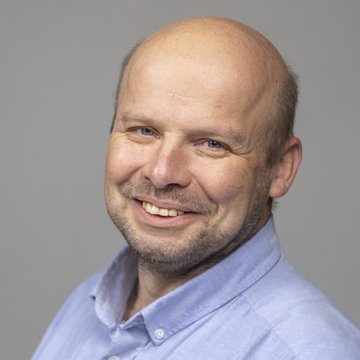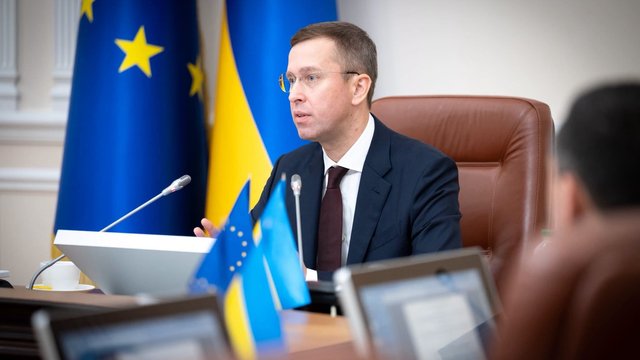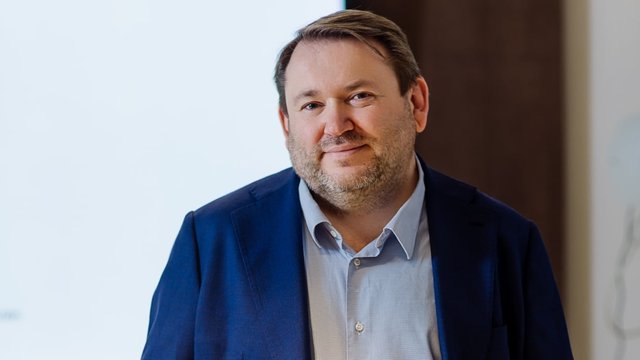
Ukraine's Alternative Executive Director at the International Monetary Fund (IMF) Vladyslav Rashkovan, Presidential Advisor on Reconstruction and Investment Attraction Oksana Markarova, and Executive Director of the New City innovative urban initiative Viktoria Trotska are working on a new city project as part of preparations for Ukraine's recovery.
"For now, I'm mostly providing inspiration, while Oksana Markarova and Viktoria Trotska are already developing the new city project and plan to present the initiative at the World Economic Forum in Davos and at the URC in Tallinn – and perhaps even display a physical model of the city," Rashkovan said in an interview with Interfax-Ukraine on the sidelines of the Annual Meetings of the International Monetary Fund and the World Bank Group, held in Bangkok on October 12-18.
According to him, following the example of the construction of the city of Slavutych in 1986-1988, the new city project envisages various districts – conventionally Italian, French, German, Eastern, and others: an international team of German, Italian, French, and Japanese architects is working on the city's design, with weekly coordination meetings.
"So far, they're all working for free. To professionalize the project and anchor it to a specific territory, funding from international organizations is needed. The European Commission likes this idea as a showcase project, since Europe also lacks modern experience in building such new cities," Rashkovan said.
He added that over the next year, with the support of international partners, he wants to prepare a kind of blueprint – a book on the principles of building new cities after the war.
"It doesn't matter whether we're talking about a new city or the reconstruction of districts in Kharkiv, Odesa, Kyiv, or Trostianets. What's important is to establish these principles. Such a resource could be useful not only for Ukraine but also for Syria, Lebanon, and other countries that have suffered war damage. It will also be of interest to European partners, who also need to undertake significant construction projects," Ukraine's representative to the IMF said.
He said that since reconstruction takes place at the local level, the idea of building new cities seems promising, as 95% of what exists at the state level is already present at the local level.
According to Rashkovan, at the city level, for example, it is possible to implement green, distributed energy systems and inclusivity, put digital democracy tools into practice, and lay the technological foundation from the ground up for the city's effective functioning: rational use of water and electricity, waste management, and transportation organization.
"We would also like to create a self-sufficient city that will not require additional funding from Kyiv, that will itself create jobs and become a magnet for talent and business, serving as a model of deregulation and a favorable investment climate," Ukraine's representative to the IMF said.
According to him, as part of this project, there is ongoing collaboration with Jenny Roe, former former Director of the Center for Design & Health in the School of Architecture, University of Virginia – who is the author of the book "Restorative Cities" about cities capable of helping people heal – as well as with Finnish and Korean experts on the concept of a two-tier safe city, since Finland leads the Shelter Coalition and has one of the best track records in this field.
Rashkovan is optimistic about the prospects for implementing such a project: it must be supported by the government, but 80-85% of it will be financed by private capital, investments, commercial loans, private equity funds, and so on.
Read the full second part of the interview with Vladyslav Rashkovan, Ukraine's Alternative Executive Director at the IMF, on Interfax-Ukraine website at https://interfax.com.ua/news/interview/1227277.html.