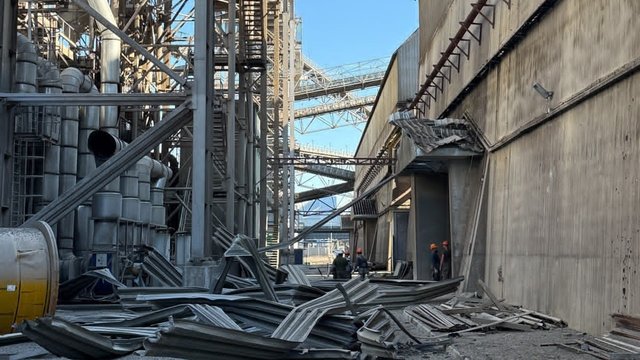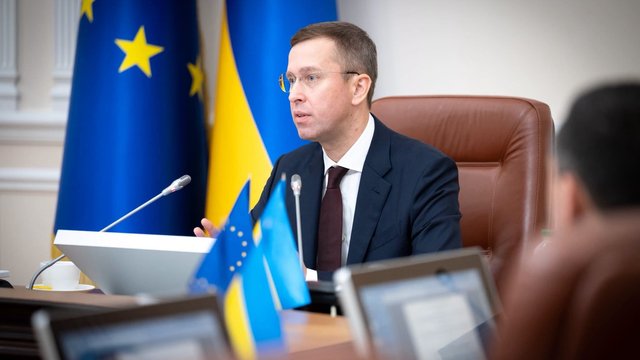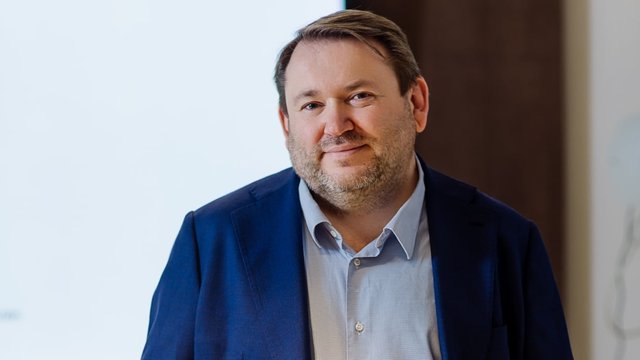
Funding for Ukraine's recovery following Russian aggression, which the World Bank currently estimates at $588 billion, should be viewed as part of a broader model and institutional architecture for reconstruction, with a vision for the postwar country being a key element, Vladyslav Rashkovan, Ukraine's Alternate Executive Director at the International Monetary Fund (IMF), believes.
"This vision must be shared and supported by the majority of Ukrainians. Frankly speaking, we do not yet have such a vision," he said in an interview with Interfax-Ukraine on the sidelines of the Annual Meetings of the International Monetary Fund and the World Bank Group, held in Bangkok on October 12–18.
Rashkovan said that the IMF does not develop such a vision because the Fund's task is to ensure current macrofinancial stability: preventing high inflation, sharp currency depreciation, and crises in the banking sector, the budget and the balance of payments.
"Structural reforms are being implemented for this purpose, but overall, this is merely a foundation for further development. Some criticize Ukraine's IMF program for lacking ambition. But its purpose is to sustain our resilience," Ukraine's representative at the Fund explained.
According to him, the Future Economy initiative, launched by the Ukrainian government and the Ministry of Economy, is intended to help shape a broader vision. The IMF participates in the initiative as an analyst rather than a strategist. "The World Bank provides more active assistance, but the key role belongs to the Ukrainian authorities and society," said Rashkovan, who has been working on issues related to Ukraine's reconstruction for many years.
He added that an interesting discussion is also underway around the Prosperity Plan: what Ukraine should become after the war and how much funding and investment will be needed for it to become a new European tiger.
"However, neither this plan nor the Future Economy initiative is a Marshall Plan at this stage. They are more like ideas that need to be developed. Money does not solve everything: an institutional architecture is needed that can sustain reconstruction over several political cycles in Ukraine and partner countries," the IMF's alternate executive director said.
He added that Ukrainian ownership of the process is one of the key principles on which reconstruction should be built. "No one will take better care of us than we do ourselves, and no one will shape a vision for Ukraine's future on our behalf," Rashkovan explained.
The expert said that this vision must be translated into strategies. "We already have many regional and sectoral strategies, perhaps even too many. They need to be aligned. And again, it is important not merely to have strategies but to live by them. All of them must contribute to realizing a shared vision," the IMF's alternate executive director said.
In his view, reconstruction is not a task that can be completed in a day or a few months; it will take decades, if not generations. Therefore, it must be planned, and the necessary institutions must be established in advance.
In addition to the IMF program focused on macrofinancial stability, without which long-term investment planning is impossible, he also cited security guarantees as a prerequisite for reconstruction.
At the same time, Ukraine's representative at the IMF believes that the end of the war is not a mandatory condition for beginning reconstruction.
"We are already rebuilding a great deal despite the war. Not on the scale we would like, but billions of dollars have already been spent on recovery," he said.
Among the other elements of the reconstruction model, he also cited European integration, noting that if Ukraine is moving toward the European Union, reconstruction should be planned in accordance with EU standards.
As for financing, Rashkovan noted that a considerable number of instruments are already available. These include the Pillar 2 investment component under the Ukraine Facility; the EUR 1 billion European Flagship Fund for the Reconstruction of Ukraine, managed by Dragon Capital and Amber Infrastructure; projects supported by the U.S. International Development Finance Corporation (DFC) and the International Finance Corporation (IFC), resources from the European Investment Bank and the European Bank for Reconstruction and Development (EBRD); and the Co-Investment Platform, which brings together 19 development finance institutions from different countries.
"All of these are working for Ukraine's benefit, but we are still far from the scale required. We need to understand that the probability of all $588 billion coming from public funds provided by international partners is zero. Historical experience shows that 75–85% will come from private sources," Ukraine's representative at the IMF said.
He clarified that private investment typically arrives significantly later than donor funding, which is why Ukraine is currently relying more heavily on donor resources.
Finally, Rashkovan said the importance of structural reforms to attract private capital, including protection of property rights and the continuation of land and anti-corruption reforms. He recalled that the Czech Republic and Poland attracted most of their private investment before joining NATO and the European Union, driven by strong investor expectations.
"If the world expects Ukraine to join the EU and we maintain the pace of reforms, the same could happen here, especially amid friendshoring – the relocation of production and procurement to geopolitically friendly countries," the expert believes.