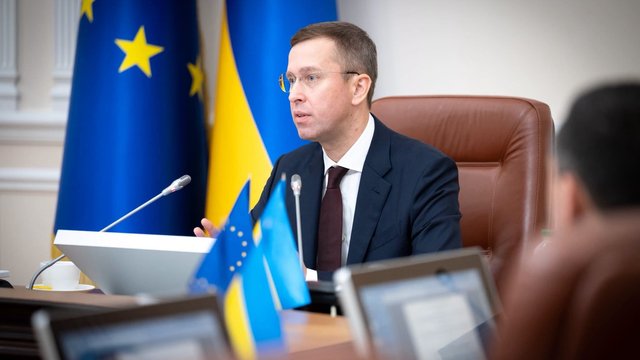
Prime Minister of Ukraine Serhiy Koretsky predicts that following changes to the reservation system, over 90-95% of employees in the fuel-energy and defense-industrial complexes will be re-reserved.
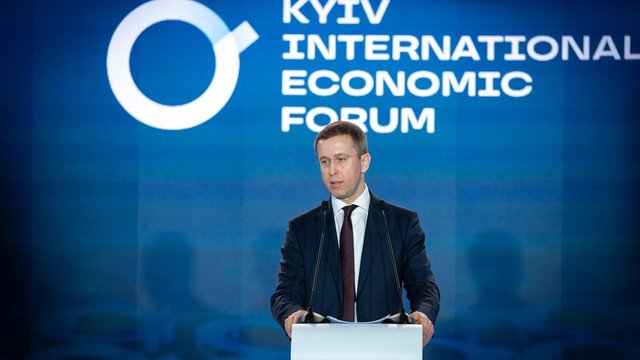
"We are separating the concept of criticality from economic reservation criteria. This is very important. Why? Because salary and the absence of tax debt are not the same as an enterprise's criticality. This is important, it indeed brings transparency, cleanup, and additional revenues, but it does not equal criticality. Critical means energy, the defense-industrial complex, communications, housing and communal services, pharmacies, groceries, logistics, and so on. But there are enterprises, a large number already, that got there largely due to salaries and a lack of tax debts. Therefore, we are separating criticality from the economy," Koretsky said at the 12th Kyiv International Economic Forum (KIEF) themed "People. Business. Economy. What's Next?" in Kyiv on Monday, as reported by an Interfax-Ukraine correspondent.
He emphasized that workers currently in the energy sector or the defense-industrial complex have nothing to worry about, as over 90-95% will be re-reserved.
"However, creating a large number of enterprises, whether IT or conditionally defense industry, where three drones are made and hundreds of people are reserved – I am conditionally simplifying, hyperbolizing in a certain sense, but that is how it is. And there are very many such cases. Contracting organizations. And it grows, grows, grows," he added.
According to the Prime Minister, changing the rules is designed, on the one hand, to cut down on unfair reservations without letting the economy collapse, and on the other hand, to give active military personnel a clear understanding regarding rotations.
"To say that these mobilization and reservation rules will produce a super-effect – no, there is no such thing, but we are at least stopping the endless growth of sometimes unfairly reserved individuals. And now, most importantly, what I am appealing to enterprises, business, and the economic sector about: we need to jointly come up with a new social model where, even if everyone is reserved, enterprises provide predictable mobilization of people into the army. This is an idealistic model. If such a solution could be found, the need to search for people on the streets would disappear. And if a business, entrepreneur, manager, or head takes on such a commitment – then nothing else is needed at all, this is a new social contract. But not thinking about it, not preparing for it, is a super-strategic mistake," Koretsky stated.
He stressed that failing to prepare in advance for a potential tightening of mobilization in Russia, which could reach 300,000–500,000 troops, would mean being forced to make unpopular decisions in manual mode once again.
"Then it won't be about reservations, or percentages. The issue is the survival of the state, and therefore this must be taken into account. Seeking to increase accountability for those who hide is also on the agenda – this is all a comprehensive story. By December 1, we must deliver a new social contract," he added, announcing a meeting with businesses on this issue.
As reported, on October 23, Prime Minister Serhiy Koretsky stated that the Cabinet of Ministers had finalized changes to the reservation system – an enterprise's criticality is being separated from its economic indicators, sectoral and regional criticality criteria will be updated, and enterprises will be checked for abuses.
The second change is that the maximum reservation level, particularly for the energy sector and defense industry, will no longer be 100% (dropping to 95%). The government will not weaken the work of those manufacturing weapons or maintaining critical infrastructure, and if uninterrupted operation requires reserving more, the enterprise can submit a justified appeal to a special Coordination Center.
The third change involves the Ministry of Defense strengthening liability for draft evasion. The fourth is the preparation of a mechanism for 100% reservation provided mobilization obligations are fulfilled: an enterprise will be able to fully reserve employees if it regularly and voluntarily recruits a portion of them for military service.
The Cabinet has also initiated a review of sectoral and regional criticality criteria, taking into account new requirements within 10 days.