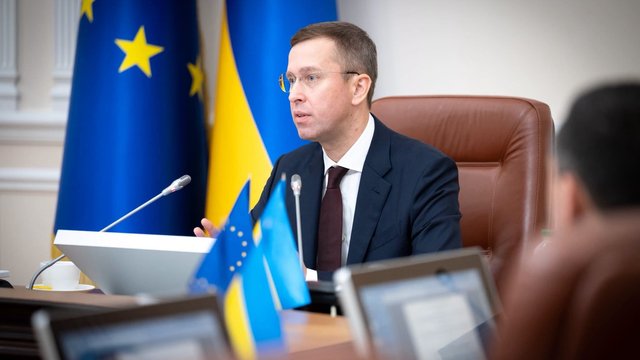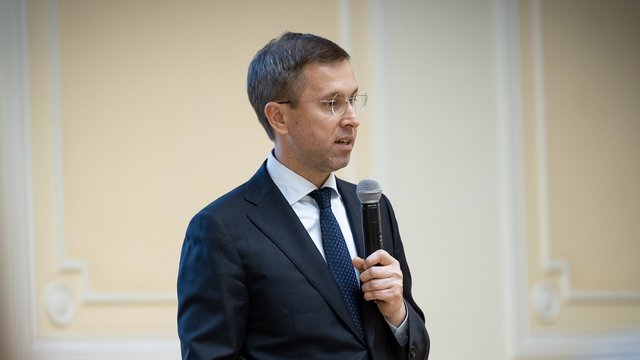
Since the Verkhovna Rada appointed Serhiy Koretsky as Prime Minister of Ukraine on July 16, 2026, a total of 2,147 attacks on energy infrastructure facilities have been recorded, with not a single day passing without strikes on the energy grid, he stated in an interview with BBC News Ukraine.
"Since July 16, when parliament voted and appointed me prime minister, approving the updated Cabinet, there has not been a single day without attacks on the energy system. Not one. 2,147 attacks as of the current moment on energy targets alone," Koretsky said.
As the prime minister emphasized, this number of strikes is manifold higher than last year's figures over the same period.
At the same time, winter preparations and the implementation of resilience plans initiated by the President of Ukraine and approved by the National Security and Defense Council (NSDC) are helping maintain the operation of critical infrastructure despite constant strikes.
"Had such a volume of strikes hit unprotected infrastructure, we would have been without power and water much earlier," Koretsky noted.
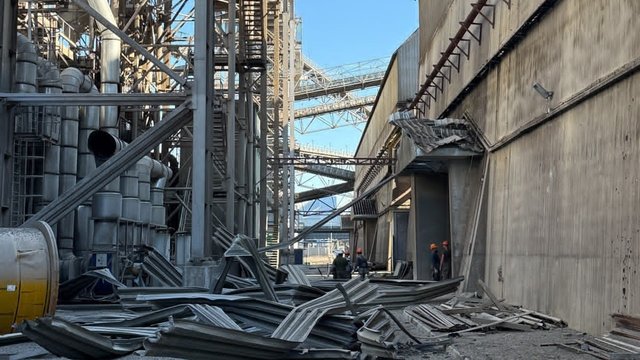
According to him, energy sector workers, municipal services, and the State Emergency Service (SES) first responders liquidate the consequences of every strike on the power grid as fast as possible, while simultaneously erecting physical defenses—sometimes directly under enemy attack.
"The fact that we do not publish or announce this every day. Believe me, behind this stands incredible work by all these people," the head of government said.
He reported that the electricity transmission system suffers particularly severe destruction. While certain individual components, such as power transformers, can be protected by engineering structures, thousands of kilometers of power lines and open distribution switchyards, covering areas comparable to football fields, cannot be fully physically shielded. Nevertheless, Ukraine has accumulated a substantial strategic reserve of such equipment.
"Our repair crews, electricians, and energy technicians have demonstrated the capability to perform restorations in the tightest possible timelines. Then another strike hits, and then restoration follows again. And this cycle has been continuing for many, many months," the prime minister said.
He noted that as winter approaches, the intensity of strikes has grown substantially, but the action plan remains unchanged: continue protecting facilities, build distributed backup generation capacity, and maintain a constant supply of equipment. This reserve is continuously replenished alongside international partners to enable the replacement of entire power units, transformers, or their components whenever necessary.
In the prime minister's view, the fact that a vast volume of attacks has not led to a total power system collapse or prolonged blackouts demonstrates that a significant portion of the infrastructure is effectively protected.
"And for what is destroyed by such an incredible number of attacks, our energy workers. Heartfelt gratitude to them, it will never be enough to say 'thank you.' Restore it as quickly and high-qualitatively as possible," Koretsky said.