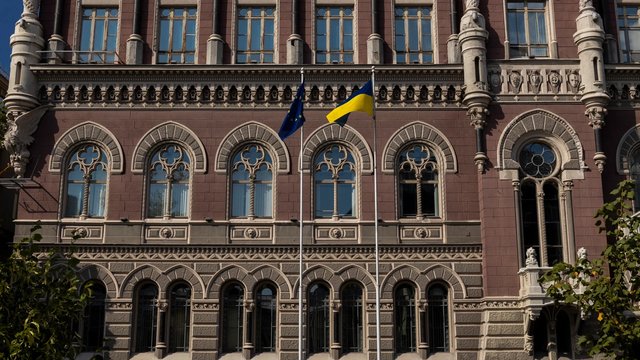
Seven of the 10 members of the Monetary Policy Committee (MPC) of the National Bank of Ukraine at a September 16 meeting spoke in favor of raising the key policy rate from 15.5% to 16%, taking into account persistent underlying price pressures, the continued emergence of second-round effects from supply shocks and increased medium-term inflationary risks.
"The decision would, among other things, help increase the attractiveness of hryvnia-denominated assets, preserve foreign exchange market stability and protect international reserves, which is important for keeping inflation expectations and processes under control," the NBU said in a statement posted on its website Monday.
According to the statement, three of the 10 participants in the discussion spoke in favor of keeping the key policy rate at 15.5%, taking into account subdued core inflation dynamics and a noticeable cooling of economic activity in recent months.
During the MPC discussion, less regular inflows of international aid and export proceeds due to significant losses in the metallurgical and agricultural sectors are increasing net demand for foreign currency and putting greater pressure on the hryvnia exchange rate. Therefore, raising the key policy rate would help increase the attractiveness of hryvnia-denominated assets, preserve foreign exchange market stability and protect international reserves.
One of the participants in the discussion also expressed concern about the dynamics of inflation expectations among various groups of respondents, particularly the deterioration in financial analysts' expectations, and noted that the information environment regarding prices for everyday consumer goods is worsening, creating risks of destabilizing household expectations.
This MPC member also said that an additional argument in favor of raising the key policy rate was the strengthening of external price pressures due to rising oil prices and possible second-round effects from higher fuel prices.
As for the arguments of those opposed to raising the rate, they included increasingly clear signs of a slowdown in economic activity, primarily due to Russia's aerial attacks.
"Specifically, real GDP dynamics in Q3 were significantly weaker than forecast by the NBU. Business outlook deteriorated sharply, which was also reflected in the labor market. In August, the total number of new vacancies was below the year-earlier level for the first time since the beginning of the year. Together with the bombardments, this could result in weaker consumer demand, which would constrain price growth in the coming months," the National Bank quoted one of the committee members as saying.
His colleague added that retail trade growth slowed significantly in August amid the destruction of trade and logistics facilities and attacks on shopping malls. According to the State Tax Service, sales of goods in all categories were less active except for equipment related to preparing the population for the heating season and power outages. The number of registrations of new cars also declined. In his view, the negative impact of Russian attacks on consumer demand in the fall and winter could be further intensified by likely power outages and an overall elevated level of danger amid longer air-raid alerts in major cities.
This MPC member also cited several other factors that could restrain inflation in subsequent periods, such as a significant supply of food on the domestic market due to difficulties exporting the harvest through the Black Sea, as this situation may not be resolved soon, as well as the moratorium on increases in key utility tariffs, which, in his view, the government will maintain for a long time.
These participants in the discussion also noted that rates on hryvnia deposits and domestic government bonds had changed little since the key policy rate increase in July due to the transmission lag, but this had not prevented continued strong demand for hryvnia-denominated assets.