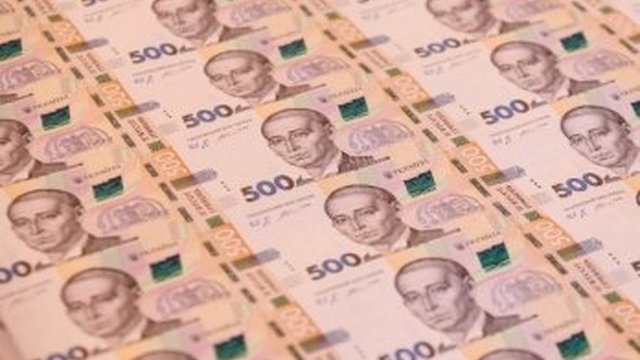
The Ministry of Economy and Environment is continuing intensive consultations with business representatives, through business associations and think tanks, on advancing and discussing the details of a proposed insurance fund for compensating first losses of up to $10 million, to be funded by raising the value-added tax rate from 20% to 21%, though business remains cautious about the idea.
According to Interfax-Ukraine, active consultations without media presence continued for nearly all of last week, with at least two meetings scheduled for Tuesday and one for Wednesday.
At the same time, none of the major business associations - the American Chamber of Commerce (AmCham), the European Business Association (EBA), the Union of Ukrainian Entrepreneurs (UUE), or the Federation of Employers of Ukraine (FEU) - have yet publicly commented on the proposal, though they are also holding internal discussions on it.
Oleh Hetman, coordinator of expert groups at the Economic Expert Platform, said at the "Think Small First" forum, held by the National Business Coalition with support from the Center for International Private Enterprise (CIPE) on September 21, that small businesses oppose the idea and are asking that an alternative model not involving a VAT rate hike be considered.
FEU council chairman Dmytro Oliynyk had also previously said the federation favored a different source of funding for the insurance fund - an import levy on non-critical goods.
Deputy Finance Minister Svitlana Vorobei stressed at the "Think Small First" forum that the issue concerns the country's food security, since logistics centers, particularly those of food suppliers from whom small businesses also purchase goods, have been among the hardest hit by destruction.
"Is this tool the right one, or 100% ideal? No, because we're increasing the imbalance between taxpayers and non-payers, since the same goods are on our market both with and without VAT: that is, VAT payers will bear more of the burden, greater risks, but this is a way out... It's an extraordinary measure, but one that will spare us disruptions in food supply... If there's another solution you consider more effective, you have ample access to both the Ministry of Finance and the Ministry of Economy," she said.
Vorobei said the idea will be discussed at a meeting between the Finance Ministry and the Economy Ministry on Thursday.
BDO Ukraine CEO Vira Savchenko, citing her own research, wrote on her Facebook page overnight into Tuesday about 225 private companies and brands whose assets or goods were damaged or destroyed on Ukrainian-controlled territory and which have publicly disclosed this.
"In the third quarter of 2026 alone, there have already been 75 cases of private business being hit - more than in any previous quarter since the start of the full-scale war," she said, adding that there were 15 such cases in the second quarter of this year and 6 in the first.
She noted that loss amounts are publicly known for only 29 of the 225 cases, totaling $0.8 billion, whereas Economy and Environment Minister Oleksii Kravchenko has estimated annual losses at around $10 billion.
Savchenko added that 2.1 million square meters of warehouse space has been destroyed - about 42% of the Class A/B warehouse real estate stock (including space built since 2022) - of which roughly 1.5 million out of 2.2 million square meters, or 68%, has been lost in the Kyiv region alone.
"That's exactly why the Ministry of Economy, Environment and Agriculture's initiative to create a #firstloss mechanism for compensating businesses' war losses is critical. The model isn't final yet: the Economy Ministry, together with the Finance Ministry, the National Bank, the Export Credit Agency, the insurance market and international partners, is currently validating the financial and operational structure," the expert said.
As previously reported, citing Prime Minister Serhiy Koretsky and Minister Kravchenko, the plan preliminarily involves a state contribution of about $1 billion to this special shelling-compensation fund, funded by raising the VAT rate from 20% to 21%, a compensation limit of $10 million, and a 2% premium rate to be paid by program participants on the coverage amount. International partners are expected to contribute an additional $1-2 billion to the fund, which could become operational as early as the start of 2027 through the state Export Credit Agency (ECA), though the fund would not cover goods.
The Economy Ministry explains its choice to raise VAT as one of the fund's financing sources by its desire to cover all industries, minimize the inflationary impact, and encourage businesses to come out of the shadows (only VAT payers could participate in the program), whereas alternative sources, such as an additional import duty, fall short on these criteria. According to preliminary estimates, a 1 percentage point VAT increase could raise inflation by 0.8 percentage points.
Yaroslav Zhelezniak, first deputy chairman of the relevant parliamentary committee, told reporters on the sidelines of the annual Yalta European Strategy meeting (YES 2026) that one possible compromise would be raising the VAT rate for just one year.
Verkhovna Rada Budget Committee Chair Roksolana Pidlasa expressed doubt that parliament would vote for a VAT hike to fund such a scheme, while Halyna Tretiakova, chair of the parliamentary Committee on Social Policy and Veterans' Rights, spoke out at the "Think Small First" forum against the idea of passing these losses on to consumers, which she said is effectively what a VAT hike would do.
Business representatives, during discussions, have voiced concerns that money from the VAT hike might not actually reach compensation payouts, that reversing the hike later would be difficult, and that the increase itself would set a bad precedent for raising taxes. They have also called on the government to look at the "gray" and "black" markets as a better source of funding for the fund.