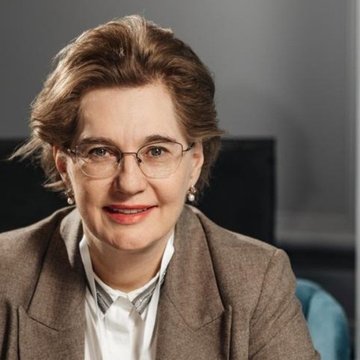
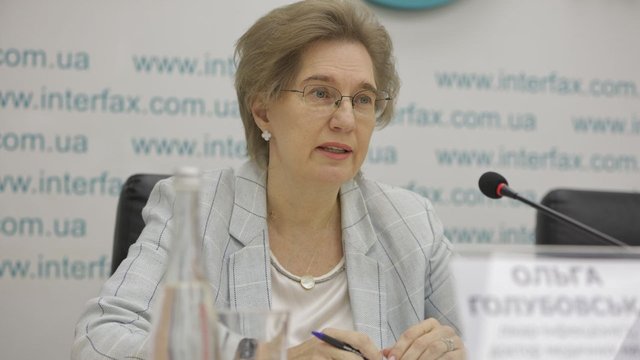
Olha Golubovska, infectious disease (ID) doctor, Professor, MD, PhD, Honored Doctor of Ukraine
How a society treats its dead, and whether it can ensure basic human dignity at the very end, reflects its level of civilisation and moral condition. Yet what is currently happening with the transportation of deceased civilians makes one thing clear: at the state level, we remain far from meeting that standard. Recently, I have been receiving frequent complaints about enormous difficulties and the inability to arrange the proper transportation of a deceased relative to a morgue or specialised facility without obstacles. Things have reached the point where people are forced to drive their deceased relatives to the morgue in their own cars. Can you imagine? So who is actually responsible for transporting a body to a morgue or a forensic medical examination bureau?
On paper, the legal framework appears to set everything out clearly. The joint order issued by the Ministry of Internal Affairs, the Ministry of Health and the Prosecutor General’s Office, including its updated version, No. 177/450/46 of 9 March 2022, establishes the relevant referral procedures. If a person had a prolonged illness and died at home with no signs of violence, a family doctor examines the body, issues a medical death certificate, and the body is referred to a pathology department. If the death was sudden, occurred in a public place, or involved suspected violence, a police investigative team attends the scene, the police issue a referral for a forensic medical examination, and the body must be transported to the bureau free of charge in a specialised vehicle. But the central flaw in this interagency document is that the central authorities have effectively shifted the entire organisational and financial burden of these transfers onto the regions and local budgets. And most local communities simply do not have the money for this.
Amid this interagency chaos, the healthcare chain of command has completely broken down, while the Ministry of Health’s so-called “reforms” have further blurred responsibility at the local level. Primary care providers often simply withdraw from the process: family doctors refuse to attend the scene to examine the body or to issue medical death certificates without an autopsy, passing everything on to the ambulance service. Under the regulations, however, emergency medical personnel merely confirm death and have no authority to transport bodies.
The result is a complete vacuum of responsibility: who is actually supposed to transport the body to a morgue or a forensic medical examination bureau? In Kyiv, a city of several million people, for example, there is effectively just one such vehicle serving each bank of the Dnipro River. Instead of transporting bodies promptly, these few vehicles operate like shared minibuses: they travel from one address to another, collect several bodies in the back, and spend hours driving around the city. The wait for a specialised vehicle stretches to 4–12 hours, while at night or on weekends the process simply comes to a halt. Keeping a body at room temperature for prolonged periods accelerates tissue decomposition, produces the odour of decay, and creates direct sanitary and epidemiological risks for those nearby.
The situation is no better in most other regions of Ukraine. In many district centres and small towns, there is no permanent municipal service with specialised vehicles for transporting the deceased. This function has effectively been handed over to private operators.
And private businesses have been profiting from this artificially created vacuum for years. Around 168 funeral-sector businesses are registered in the capital, with more than 40 private funeral agencies actively operating. Yet the vast majority have neither their own refrigerated storage facilities nor specialised vehicles. They are simply intermediaries who buy personal data about the deceased from the 102 police and 103 ambulance emergency response systems. They appear at people’s doors within minutes of an emergency call, put psychological pressure on grieving relatives in shock, and thrust contracts in front of them. They charge UAH 3,000–6,000 for a basic transfer to the morgue, while carrying the body down the stairs or providing an “urgent” service immediately pushes the price up to UAH 8,000–10,000.
This is compounded by gross violations of sanitary and technical standards during transportation itself. Bodies are often transported in unsuitable vans without cooling systems or restraints, while crews directly demand unofficial additional payments from relatives as they carry the deceased out of the apartment. An equally serious problem arises at morgues: because public facilities do not accept bodies outside working hours, private operators often deliver them to locked doors or exploit claims that municipal refrigerated storage facilities have “no space”. As a result, relatives are effectively forced to have the body taken to private refrigerated storage at inflated daily rates.
Thus, the legally established procedure for referring a body for an autopsy or examination free of charge, whether to a pathology department or a forensic medical examination bureau, has turned into a commercial conveyor belt and outright extortion. Involving private operators in cases requiring a forensic medical examination also creates catastrophic risks for legal proceedings. Transportation in unsuitable vehicles without restraints can cause post-mortem injuries and the mixing of biological traces. This directly undermines the evidence available for forensic examination and gives defence lawyers grounds to challenge the findings in court. By silently watching this chaos unfold, the Ministry of Health and law enforcement agencies have effectively legitimised the mistreatment of people.
Until the state is willing to enforce strict controls over the confidentiality of medical data, ensure adequate municipal funding for specialised vehicles, and secure full compliance with interagency orders without shifting the costs onto citizens, all talk of European standards in healthcare and a civilised society will remain nothing more than empty declarations.