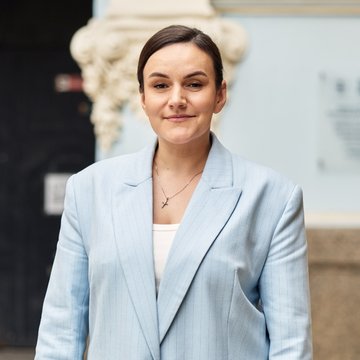

Tetyana Berezhna, Vice Prime Minister of Ukraine for Humanitarian Policy – Minister of Culture
Russia is burning Ukrainian books by the million. Ukrainians continue to choose books in Ukrainian: according to a new study, 87% of readers surveyed had read or listened to books in Ukrainian over the past year.
These two realities define our responsibility as a state. We must help the book sector withstand these attacks and give Ukrainians access to books that interest them. Sustaining that interest in the years ahead depends on the range of titles published in Ukrainian and how accessible they are.
The Ministry of Culture of Ukraine commissioned a comprehensive study, Reading in Ukraine: Behaviour, Motivation and Tools for Engagement, conducted by Gradus Research with support from the Believe in Yourself Foundation. The researchers combined 41 in-depth interviews with book sector professionals and people who had returned to reading with a survey of 2,200 Ukrainians aged 14 and over.
People Are Returning to Reading
Over the past year, 59% of respondents had read or listened to books at least several times a month. One-third did so at least several times a week.
At the same time, 70% of readers surveyed had experienced a break from reading lasting six months or longer. Of those who had taken such a break, 35% had returned to regular reading, while another 62% now read occasionally.
This is an important finding for policies to encourage reading. Reading habits change with people’s lives. Work, parenthood, relocation and exhaustion all affect the time and attention someone can give to a book. A change in routine, a recommendation from someone close or a compelling story can help bring them back.
Support therefore matters at different stages of life: when children first discover books, when teenagers develop their own tastes and when adults rediscover an interest in literature.
During the war, books have taken on particular emotional significance. Among readers, 32% say reading helps reduce anxiety, 30% say it helps them recover emotionally and 28% say it helps them cope with stress. Among those who returned to reading after a break, the most frequently cited reason was a psychological need for rest, support or relief from stress. This was selected by 34%.
Participants in the in-depth interviews also described exhaustion that makes it difficult to concentrate. We should take this experience into account when encouraging people to read. Some need a novel that offers a moment of respite; others need a book that helps them make sense of what they have lived through. A wide range of literature and formats allows people to choose what meets their needs at a particular moment.
Books Need to Be Within Reach
Of all respondents, 37% said that coming across an interesting book had encouraged, or could encourage, them to read more. This was the most common answer. Among those who had returned to reading after a break, 31% recalled seeing a book that caught their interest.
The opportunity to encounter books in everyday life therefore matters: to browse a title, talk to a bookseller or discover new releases on a library shelf.
Only 34% of respondents believe their town or community has enough bookshops. Another 22% say there are too few, while 21% say there are none at all. Where people live has a significant impact on their access to literature.
The Government has already adopted a resolution developed by the Ministry of Culture to reimburse bookshops for the cost of renting their premises. The first phase will cover communities with populations of up to 100,000. The first payments are planned for the first quarter of 2027, covering rent paid in the fourth quarter of 2026.
Bookshops will use the reimbursed funds to purchase books or pay for titles already sold. This will help booksellers stay in business and publishers receive payments sooner.
For a community, a bookshop can also be a place to meet authors, join discussions and discover contemporary Ukrainian literature. Supporting bookshops gives people more opportunities to participate in cultural life close to home.
Library Acquisitions Must Reflect Readers’ Interests
Among respondents, 73% know of a library in their town or community where they can borrow books free of charge. This is an extensive network that needs to develop in line with communities’ needs.
Among those who do not use libraries, 19% cited a lack of titles that interest them, while 12% pointed to a shortage of new releases. In small towns, the share of people who say libraries lack books that interest them reaches 27%.
Acquisitions should therefore begin with readers’ requests. Librarians know which authors visitors are looking for, which books teenagers are waiting for and which titles families with children borrow. This knowledge should shape library collections.
For the first time since 2021, the draft state budget for 2027 includes funding to purchase new books for libraries. The Ministry of Culture is working to replenish public library collections, while school libraries fall within the remit of the Ministry of Education and Science. We plan to build the public library programme around an assessment of communities’ needs.
Together with our partners, we are also working to improve library spaces. Libraries in Rohatyn, in the Ivano-Frankivsk region, and Bilohiria, in the Khmelnytskyi region, became the first pilot sites for the Libraries for All programme. Up-to-date collections, welcoming spaces and professional advice should help people find books they connect with—and return for more.
Supporting Readers’ Own Choices
Among readers aged 18–24, 91% had read or listened to books in Ukrainian over the past year. The state has an important role in sustaining this interest and giving young people the means to choose their own reading.
From the launch of the eKnyha programme in December 2024 to the end of June 2026, young Ukrainians purchased more than 549,000 books through the scheme. State support translated into books that readers chose for themselves, while also supporting the book sector.
We are working to extend eKnyha to parents of newborns. We look to the Verkhovna Rada to support this expansion so that families can receive assistance to buy books from the beginning of a child’s life. After all, a child’s introduction to reading often begins with time spent with their parents, the sound of their voices and a first favourite story.
As children grow, they need room to make their own choices. Contemporary literature for reading for pleasure should therefore also be available in school libraries. The opportunity to try different genres, discover authors and share impressions with friends helps children develop their own tastes as readers.
In 2027, we also plan to expand the Tysiachovesna programme to include the book sector. Support for new Ukrainian publications should go hand in hand with the development of bookshops, libraries and interest in reading.
I measure the results of this work by the opportunities it creates for people. Can a child choose an interesting book at the library? Can a young person afford literature that reflects their own tastes? Can an adult reader find the title they need in their community?
The study gives us a basis for making decisions and assessing their results. We need to understand how bookshops perform after receiving support, whether readers borrow newly acquired library books and how young people’s interest in reading develops.
Ivan Franko wrote:
Books are the depths of the sea:
Whoever dives down to the bottom,
Though the effort be great,
Brings wondrous pearls to the surface.
For every reader, these “pearls” are different: new knowledge, a better understanding of themselves or support through a difficult time. Ukrainian literature gives us the opportunity to reflect on our experiences, discover the world and form our own opinions.
Our task as a state is to broaden that choice. To ensure that libraries receive the books their readers are waiting for, that bookshops can operate in communities and that literature for different ages and interests is published in Ukrainian. To help everyone find the book that sparks a love of reading—or brings them back to it.
We cannot choose the book that will captivate someone. But we can give them more opportunities to find it.