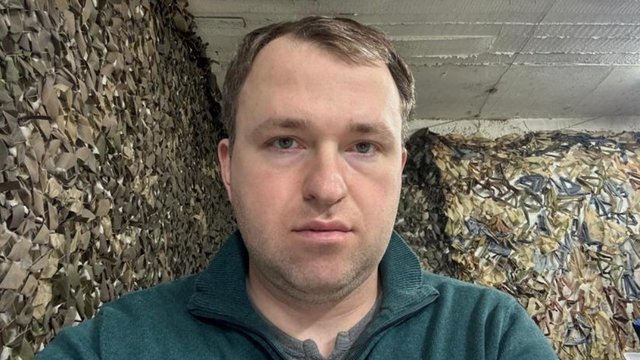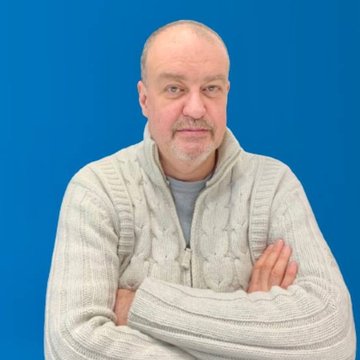

Oleksandr Larin, Founder of ‘Idealist Media’ platform, General Secretary of the Basketball Federation of Ukraine (2011-2015), Deputy Minister of Sport of Ukraine (2010)
Recently Ms. Stella Zakharova, Olympic champion and Vice President of the Ukrainian Gymnastics Federation submitted a report to the Gymnastics Ethics Foundation, the body responsible for ethical and disciplinary matters within the World Gymnastics system. The report is based on documented actions by Russian gymnastics structures in the temporarily occupied territories of Ukraine. It was prepared not as a political declaration, but as a legal case: facts, documents, federation rules, procedure, and a request that the competent body provide an assessment.
At first glance, this is a story about gymnastics. To me, it is much more than that. It tests whether Ukraine is capable of moving from the model of “we object your decision” to a different one: “here are your rules, here are the actions of your member — explain whether the two are consistent.” And it brings us back to a broader question: why has Ukraine still not built a systematic legal mechanism for protecting its interests in international sport?
Several years ago, we already proposed a different approach: not to wait for an unfavorable decision and not to start looking for lawyers after the problem has already emerged, but to work proactively — through statutes, regulations, disciplinary procedures, the rights of national federations, and, when necessary, the Court of Arbitration for Sport (CAS).
In 2023, after the Ms.Olga Kharlan case, Mr.Taras Samborskyi said it directly: the rules of international federations must be worked with before a conflict, not after one. In December of that same year, the NGO Sports Context presented the Office of the President and the Ministry of Youth and Sports(Ministry) with a concept for reforming the system: the state should stop merely reacting to consequences and instead create mechanisms that function regardless of who happens to occupy the minister’s office.
The problem was visible, and an alternative was proposed, but it never became a system. That is why the principle we proposed to the state of Ukraine is now being implemented, together with the lawyers and experts of Sports Context, in our work with Ms.Stella Zakharova. There is a concrete case, a procedure, and eventually there shodw be a result.
The State and International Sport Use Different Tools
The state operates through diplomacy, political statements, sanctions, intergovernmental relations, and decisions by public authorities. International sport operates through its own statutes, disciplinary codes, ethical rules, appeals procedures, membership rules, and dispute-resolution mechanisms.
Even if Ukraine is one hundred percent right politically, an international federation is not legally obligated to act the way we demand. A minister of Youth and Sports can make a statement, the Foreign Ministry can send a diplomatic note, partners can support Ukraine — but in the end, the federation will open its own statute. If we do not speak the language of that statute, political legitimacy risks remaining nothing more than a statement.
A Different Strategy Could Have Been Chosen Earlier
After the start of the full-scale invasion, the focus on the political and diplomatic isolation of Russian sport was logical and produced results. But over time, the limitations of that strategy became clear: “neutral status,” the return of Russian athletes, and the gradual rollback of restrictions. And each time, Ukraine was reacting to a decision that had already been made.
Mr.Matvii Bidnyi has been part of the leadership of the Ministry of Youth and Sports since 2020 — long enough to see the weak points of the existing strategy and to hear an alternative. That alternative existed: move from a reactive model to a systemic one — work through law, procedures, the internal mechanisms of international federations, and support Ukrainian national federations as full-fledged actors in international sport.
That transition never happened. First, an international institution makes a decision; then Ukraine looks for a way to stop it, change it, or appeal it. At this point, the problem is no longer a single decision. It is the architecture of the policy itself.
The Difference Between Protest and a Legal Problem
A political statement can be ignored. A properly framed legal question is much harder to ignore.
“Do not allow Russian athletes to compete because Russia is waging a war” is a strong moral and political position, but it still leaves a federation room to choose. A very different question is: “Do the actions of your member comply with your own rules?” At that point, the federation no longer has to be persuaded to support Ukraine; it has to explain how it applies its own rules.
That is the logic behind Ms.Zakharova’s case: not “support us,” but “here is the fact, here is the document, here is the action of your member, here is the relevant rule — now provide an answer.” Political volume is replaced by a legally structured contradiction.
And This Is Where Sports Context Has to Be Mentioned
The evidentiary and strategic architecture of this case is being developed with the participation of experts from the NGO Sports Context — the same organization that previously proposed this kind of work to the Ministry.
In January 2025, as head of the NGO, I signed a memorandum of cooperation with Mr.Matvii Bidnyi. We saw it as an opportunity to move from conversations about reform to joint professional work. A permanent mechanism for that cooperation never took shape.
We were ready to cooperate, but not to serve as expert decoration, not to endorse decisions that had already been made, and not to participate in a process where an expert is expected to agree rather than maintain an independent position. We were ready to work on changing the rules. That model turned out not to be needed.
The work moved outside the Ministry. We are now implementing the same approach directly within sport. Ms.Stella Zakharova’s case is one example — and, at the same time, an experiment: political reaction after a problem emerges versus a legal sequence of fact, evidence, rule, and procedure.
What a “Legal Approach” Means in Practice
First, the fact is established. The evidence is verified. The applicable rule is identified, along with the competent body, the applicant’s procedural standing, and the relevant procedure. Only then does political and diplomatic support come into play.
If a Russian sports structure is operating in occupied Ukrainian territory, the first question should not be, “What statement will the Ministry make?” It should be: what rule may have been violated, who has standing to submit a complaint, to which body, within what deadline, under what standard of proof, and with what documents?
That is when politics strengthens the law instead of replacing it.
The State Should Not Do the Federation’s Job
This should be part of the state’s sports infrastructure. Today, we see two extremes: either the state treats federations as if they were its own administrative departments, or it suddenly remembers the autonomy of sport and says, “that is your problem.” Both approaches are wrong.
The state should not draft an appeal to an international federation on behalf of a national federation. It should provide access to sports lawyers, an evidence base, systematic monitoring, diplomatic support, and, where necessary, funding for complex international proceedings. Its role is not to manage the federation, but to strengthen its capacity.
The responsibility of the relevant minister is not to produce the best statement after the latest decision by World Gymnastics, the IOC, or another international federation. It is to make sure the system is working before that decision is made.
Developments should be monitored continuously, documents should be collected, and a legal team should immediately determine whether there is a potential violation, whether a procedure exists, who has standing, and what further action is available. A national federation should not have to start from scratch every single time.
That is exactly what we proposed. So the question is not whether the minister knew about another approach. He did: there were meetings, proposals, a concept, and even a memorandum of cooperation.
Why did this approach never become part of state sports policy?
What Such a System Should Actually Do
It should monitor not only the eligibility of Russian athletes, but deeper processes as well: which Russian sports federations incorporate organizations from occupied territories into their structures; where Crimea, Donetsk, Luhansk, Zaporizhzhia, or Kherson regions appear in official Russian sports documents; who participates in competitions; who is included on judging lists; which regional organizations are recognized; which appointments are made; and what changes are introduced into statutes.
Every fact should pass through a legal filter: what is legally significant here, what rule may have been violated, which body has jurisdiction, and what procedure is available? That is what professional policy looks like.
We are Not Saying the Ministry and the NOC Did Nothing
There were statements, diplomatic efforts, and legal steps. The question is why they never became a permanent system. Why does law usually appear only after a crisis? Why is there no unified evidence infrastructure? Why are Ukrainean national sports federations so often left alone with the problem? Why were the experts who proposed such a model several years ago never integrated into a permanent mechanism?
Against that background, Ms.Zakharova’s case is particularly revealing: a concrete legal process is now being prepared with the same expert team whose potential for systematic cooperation the Ministry failed to recognize.
The NOC Could Also Play a Different Role
The National Olympic Committee of Ukraine can be an important institution precisely because it is not a government body, yet it operates inside the international Olympic movement. It could accumulate legal practice across sport federations, maintain expertise in international procedures, and create an early-response mechanism. But the Ukrainean NOC should not turn into a second Ministry. Its strength lies in its autonomy.
A Strong Sport Federation Is a Resource, Not a Problem
The state does not need a weak sport federation that is easy to control. It needs a strong one — one that knows its rights, has the necessary expertise, and is capable of acting within its international federation.
A government official often has no procedural standing there, while a national federation does. A minister can send a letter; a federation, under certain conditions, can initiate a procedure. That is why sports autonomy is not a threat to the state, but an additional channel for protecting the national interest.
The Most Important Part of Ms.Zakharova’s Story Is Still Ahead
I do not know what decision the GEF will make, and no one has the right to guarantee the outcome: legal results are not announced in advance.
But already today, a small team of athletes, lawyers, and experts is doing what we proposed several years ago should become part of a state system: gathering evidence, verifying facts, identifying rules, determining procedures, working with a person inside the sports system who has the appropriate standing, and building a legal case instead of merely creating a media event. To a significant extent, this is happening outside the state system.
So my question to the Ministry — and personally to Mr.Matvii Bidnyi — is not whether they support Ms.Stella Zakharova’s report. That is secondary. The real question is why an expert resource capable of building cases like this never became part of the system for protecting Ukrainian sports interests, especially when this very approach had been proposed to the Ministry in advance.
From Asking for Support to Becoming a Legal Actor
Ukraine has already learned how to explain to international sport why its decisions are unfair. The next step is to learn how to work with the system itself: its statutes, regulations, procedures, competencies, disciplinary bodies, and CAS.
And to move from the position:
“Support us because we are right”
to another:
“Here is the fact. Here is the evidence. Here is your rule. Here is the procedure you created. Now apply your own rules.”
To me, that is what real agency means.
For the Ukrainian state, the principle is simple: do not manage sport in place of sports institutions; create the conditions in which those institutions are capable of professionally defending both their own rights and Ukraine’s national interests.
This is the logic we have been advancing for several years at Sports Context. The Ministry had the opportunity to use this expertise; at one point, we even formalized our cooperation, but no lasting working relationship emerged. The expertise did not disappear. It simply began to be implemented directly through actors within sport.
After the Ms.Stella Zakharova case, I would leave two questions.
First: what is more effective for the state — to control an independent expert community, to distance itself from it, or to learn how to use it as a normal part of a modern sports ecosystem?
And second: if the approach we proposed to the Ministry several years ago is now beginning to work without the Ministry, perhaps it is finally time to look not at who proposed it, but at the approach itself.