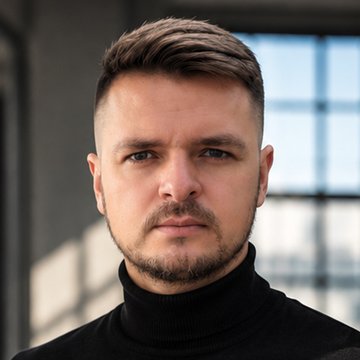
Alexander Kondratenko, Political Analyst, Political Consultant
"The game that characterizes dictators far better than chess is poker — because it is built on bluffing."
Garry Kasparov
Donald Trump likes to talk about international politics in the language of cards: a strong card, a weak card, a trump card, a bargaining position. And this language works well for public-facing politics — the kind seen by cameras, heard by voters, and discussed in the news.
But that is only the surface of the game.
In poker, even a strong starting hand does not guarantee victory. New cards come on the flop, turn, and river — and what initially looked like an advantage may never come together into a winning combination.
In international politics, powerful players learned long ago not to rely on which card will be dealt next. They shape their position so that the next move by another player can no longer fundamentally alter the balance of the game.
While public politics argues over who holds the stronger cards, the real struggle is taking place on another plane. There, players do not wait for the next card. They position their pieces.
The pieces are money, energy, technology, manufacturing capacity, defense industries, logistics, critical raw materials, markets, and alliances. Whoever controls these resources does not merely influence individual decisions — they determine the limits of what is possible for others.
That is why the most important developments of the coming months may unfold far from where the headlines are looking today.
For Ukraine, the question is no longer simply which cards its partners will give it. The question is which of its own pieces it can position in such a way that other players are forced to take Ukraine’s move into account.
And this is where Ukraine’s central problem emerges. We too often assess our own capabilities by looking at the cards we hold: how much weaponry we will receive, what financial aid package our partners will approve, what security guarantees they will offer, and what position Washington or Brussels will take.
But cards change. Presidents, governments, political coalitions, economic conditions, and national priorities change. What matters far more is which pieces are on the board and who has the ability to move them.
Ukraine has partly lost its agency — not because anyone directly controls it, but because its ability to determine some of its own moves is now severely constrained. The reason is obvious: resource dependence. Financing, weapons, technology, and political and diplomatic support depend to a significant extent on decisions made by other states and centers of power. Whoever controls a critical resource inevitably gains additional influence over those who depend on it. That is why Ukraine’s room for independent maneuver is considerably narrower today than it should be.
The problem is not dependence itself. In today’s world, everyone is dependent on everyone else to some extent. The problem is that Ukraine’s dependence remains largely one-sided.
This dependence cannot simply be eliminated. It must be transformed.
The only way forward is to gradually build positions and capabilities of its own that the state can use independently and that, at the same time, become important to others.
The most obvious of these is the defense industry. Ukraine already possesses what most European states do not: extensive combat experience, technological solutions, manufacturing expertise, and the ability to rapidly adapt weapons to the realities of the battlefield. If this is turned into an integral part of European defense production, Ukraine will not only receive security resources — it will become a source of them.
But military production is only one area. Another, no less important, is control over its own resources.
Ukraine has significant resource potential, but simply owning deposits does not in itself create political weight. If a country merely extracts and sells raw materials, most of the added value and control remain outside the country.
The task, therefore, is not to sell Ukrainian resources at a higher price, but to turn them into an instrument of long-term influence. This means processing, manufacturing, technology, and control over part of the supply chain. Ukrainian resources must be needed not merely as raw materials, but as part of a production system without which it becomes harder for partners to pursue their own economic and security interests.
Then a resource ceases to be merely a commodity. It becomes leverage — and a piece that Ukraine can move in its own game.
There is another area in which Ukraine is currently forced to play defensively: energy. Russian strikes have turned it into one of the country’s principal vulnerabilities. But after the war, simply rebuilding what was destroyed would mean returning to the same dependence.
Ukraine needs a fundamentally different energy system — decentralized, technologically advanced, and integrated with Europe. Then what is a weakness today could become a source of economic and political strength.
There is an old principle of great-power politics: if you do not set the rules of the game, you are forced to play by someone else’s rules. For Ukraine today, this is no longer a theoretical formula but a matter of national strategy.
The longer we remain primarily consumers of other people’s resources — financial, military, technological, and energy resources — the more our next move will depend on someone else’s decision. And then even the strongest diplomatic position cannot compensate for the absence of resources of influence of our own.
Ukraine needs to stop measuring its agency by the number of cards it has been dealt and start measuring it by the number of pieces it is capable of moving itself.
This does not mean leaving the game. On the contrary — it means finally playing it on its own terms.
Because Trump may have the strongest cards at the table. But real politics begins where poker ends.