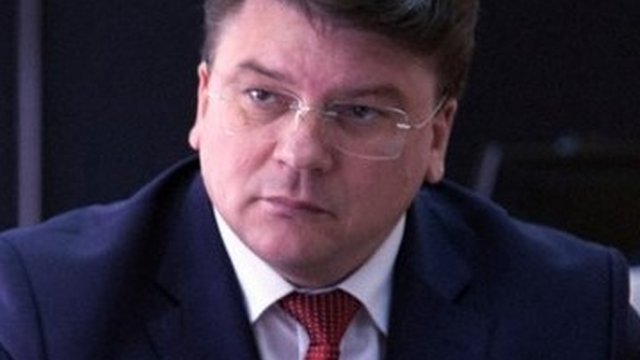

Volodymyr Kreidenko, Ukrainian MP, deputy chairman of the Committee on Transport and Infrastructure, and Chair of the cross-party parliamentary group ‘Dobrobat – Volunteer Construction Battalion’
A Kyiv traffic jam before a bridge is not just a long queue of cars. Sitting in it could be a doctor expected for a shift, a truck with groceries for a store, or a crew heading to restore heating to homes. When traffic across the Dnipro is restricted, a common inconvenience quickly becomes a problem for the entire city.
In winter, the cost of every delay increases. Black ice, more difficult transport operations, and the risk of power outages are added to potential closures. That is precisely why a plan for connection between the riverbanks is needed before the freezing weather sets in, not when Kyiv residents are already stuck in hours-long queues.
According to a previously published city estimate, about 300,000 cars crossed the bridges over the Dnipro daily. This is a benchmark of scale, not a measure of current flow. The subway carries around 4 million passengers a week. Such a load explains why there is no single route to which all people and cargo can be painlessly redirected.
One should start with a question that often goes unnoticed in traffic jams: how will a truck get through? It carries more than just goods for sale. It may be delivering medicines, food, or materials for utility network repairs. At the same time, heavy transport cannot be arbitrarily directed onto every open bridge: some crossings have weight restrictions.
Kyiv needs a prepared option for a dedicated ferry crossing for trucks. This involves designated piers, access roads, and a list of priority cargo that the city must receive first. Passenger ferries should be prepared separately. Their routes should start and end near convenient subway transfers—for instance, it is worth testing the connection between the areas around the "Slavutych" and "Poshtova Ploshcha" stations. A passenger should have a clear path from the station to the pier, and on the other bank, the ability to immediately continue their journey.
In a winter plan, ferries can only serve as a backup under safe conditions. The city needs to determine in advance whether the vessels and piers are fit for operation in cold weather, under what weather conditions trips are possible, and what to do if ice appears. Furthermore, martial law restricts navigation: trips require military decisions and permits. Preparation means going through this process well in advance, rather than promising people a crossing that will not be able to set sail.
The main load in winter will still be carried by open bridges, the subway, and buses. Therefore, the possibility of tidal (reversible) lanes should be tested on bridges: giving more lanes from the left bank to the right bank in the morning, and vice versa in the evening. Where the structure permits, a scheme of three lanes in one direction and two in the other may better match the traffic flow than a fixed distribution throughout the whole day. However, decisions regarding each bridge must be made by engineers and traffic managers. Drivers must see clear signals, and buses and emergency services must be able to pass through on time.
Near the crossings, another simple thing is needed: a place where a person can change their mode of transport. Cycling hubs could be prepared near the "Slavutych" and "Vydubychi" areas, as well as near stations on the Red Line, particularly "Livoberezhna" and "Arsenalna". This means parking or rentals, lighting, safe access, and transfers to the subway or bus. In winter, these routes may not be used every day, so the city must provide for their snow removal and shuttle bus connections during severe weather. However, giving up the opportunity to eliminate a portion of short car trips would be a mistake.
Finally, Kyiv can alter not only routes but also travel times. For private cars, I propose a voluntary rule: if the last digit of the license plate is even, plan departures and returns during even hours; if odd, during odd hours. For example, a car with the digit 4 could depart between 08:00 and 09:00 and return between 18:00 and 19:00, while a car with the digit 5 could depart between 07:00 and 08:00 and return between 17:00 and 18:00. This should work alongside flexible schedules from employers. No such recommendations should apply to emergency trips, public transit, or essential deliveries.
This rule has no guaranteed outcome in advance. It is worth testing over about two weeks to see whether travel time is truly reduced or if the queue simply shifted to the next hour. Similarly, the city must inform Kyivans daily about the status of crossings, actual bus movements, and available transfers.
Preparing for winter means giving people answers before they leave their homes. Which route will the bus take? How will cargo reach its destination? Where can one transfer? What changes if one crossing becomes unavailable? Kyiv cannot eliminate all threats. But it is capable of facing them with prepared routes, clear rules, and accountability for every hour the city cannot afford to lose.