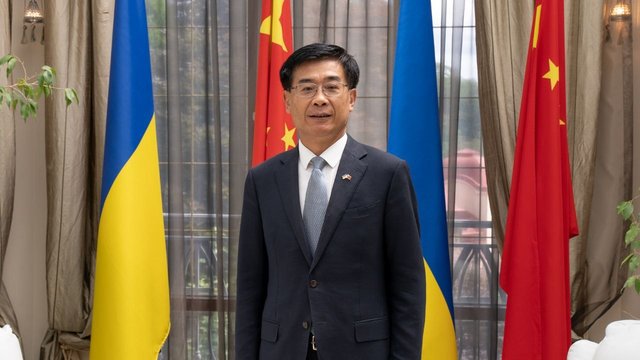
Pavlo Velykorechanin, PhD in Law, lawyer, specialist in public administration and management of seized assets, Deputy Head of ARMA (2023–2025)
As is well known, some of Viktor Medvedchuk's seized movable assets have already been successfully sold. Through the state-run Prozorro.Sale auctions, his luxury vehicles, including a Maybach, were sold. His collection of watches and some paintings from his private art collection also went under the hammer.
And although selling them is a good thing, the main lot - the 92-metre superyacht Royal Romance - has still not been sold. Moreover, while the watches and paintings generated UAH 10 million, which went towards the issuance of war bonds, the sale of the yacht could have generated USD 130 million. The difference, as we can see, is substantial.
But the state has not received a single cent from these hypothetical USD 130 million. Even though the yacht was seized back in 2022. “Medvedchuk's asset at the mooring,” investigative journalists wrote, playing on the word “mooring” -both the place where the vessel is berthed and the bitter joke that the entire system built for asset recovery has played on the yacht.
Enough investigations have been published and numerous reports have been aired about Medvedchuk's yacht. But no definitive answer has been found to the question of who is responsible for delaying the sale of the vessel. It is indeed difficult to give one, pointing to a specific person and placing responsibility for the situation on them. But let's try to figure it out together.
Problem One - Delay
April 12, 2022. President Volodymyr Zelenskyy announces a successful special operation during which the Security Service of Ukraine detained Medvedchuk while he was attempting to flee the country. This was the second arrest of the suspect - the first time an electronic bracelet was placed on Medvedchuk was on May 13, 2021. He was served with a suspicion of high treason. After February 24, 2022, Medvedchuk left the place where he had been under house arrest and went into hiding for some time.
Medvedchuk would later be exchanged for 200 Ukrainian servicemen and transferred to Russia. He settled in Moscow, but his lawyers - at least some of them - remained in Kyiv. And they did not simply remain there.
For example, Bohdan Koval, who worked on Medvedchuk's defence, stopped practising as a lawyer at the end of 2025 and became head of the Legal Department of the Asset Recovery and Management Agency. Yes, the very same ARMA that is responsible for recovering assets, including Medvedchuk's assets. And now, at ARMA's initiative, he is also seeking to receive the title of “Honoured Lawyer”. Let's simply remember this fact.
Let's remember it and move on.
So, Medvedchuk was arrested in the spring of 2022. But he was not the only one - his property, including Royal Romance, was also seized. And then the government needed two years, until April 2024, to give ARMA permission to sell Medvedchuk's yacht.
Why the Cabinet of Ministers delayed the sale of this asset for so long is a question for the Cabinet of Ministers. But I can explain why this delay proved fatal.
The point is that Royal Romance was detained in Croatia, where it remains to this day. The local court seized the yacht for a period of two years, which is the maximum possible period of restriction on property under Croatian law. This period expired in May 2024. And only one month before that - as already mentioned, in April - the government gave the green light for the sale of the asset.
Problem Two - Pressure from Medvedchuk's Lawyers
So, after the government's “green light”, ARMA began the process of selling the yacht. It held the first meeting of the competition to select an auction organiser. The competition commission included both representatives of the Agency and authorised representatives from the Ministries of Justice and Economy.
But there had never been such experience with property seized abroad — neither in Ukraine nor anywhere else in the world. So who would actually handle the sale of the yacht? Applications from auction houses were submitted and accepted until mid-April.
The commission received more than a dozen applications from different countries from those willing to become auction organisers. The list included EU countries, the Netherlands, the United Kingdom, Austria and the United States.
The results were announced on April 23, and three winners made it to the final.
The Dutch auction house Troostwijk Auctions took first place. The American company Boathouse Auctions came second. The Dutch company was selected because it requested the lowest percentage fee for the sale of the yacht. Troostwijk Auctions also promised that it would not influence the choice of buyer, but would ensure that the buyer was not a person connected to Medvedchuk, or a Russian or Belarusian national.
However, already on April 30, Troostwijk Auctions announced that it was withdrawing from further participation in the sale of the yacht. “This happened as a result of pressure from Viktor Medvedchuk's lawyers,” it was said at the time.
After that, the right to conduct the sale was transferred to Boathouse Auctions.
However, this company also withdrew from the auction. On June 3, 2024, the American auction house announced that it would no longer participate, citing “legal obstacles from representatives of the former owner's company, which created unacceptable reputational and litigation risks for the company.”
So, does the right to sell the yacht now pass to the third - the “bronze” - winner of the competition?
No. The process has been suspended altogether.
Meanwhile, in June 2024, the Croatian court lifted the seizure of the yacht. What followed in this story was a dramatic episode involving an attempted theft of the vessel by people linked to Medvedchuk, but I will not dwell on that here.
The yacht - despite everything - remains in Croatia. It has been possible to keep it there thanks to certain EU sanctions restrictions. In other words, the vessel is effectively under an indefinite EU seizure, and thank God such an option exists; otherwise, this yacht would have sailed away long ago - both literally and figuratively.
Problem Three - The Absence of an Indictment
There is an important nuance that needs to be added to everything said above. When, in June 2024, the District Court of Split, Croatia, lifted the two-year seizure of Royal Romance, it referred to the fact that the Croatian side had never received an indictment against Medvedchuk from Ukraine.
And, let us agree, that is logical. Because if there are no legally formalised claims against a person, what preventive measures can be taken against their property?
But who is responsible for preparing the indictment? Under the current Criminal Procedure Code of Ukraine, the indictment is prepared by the investigator handling the suspect's case. The indictment is then approved by - or may itself be prepared by - a prosecutor from the Office of the Prosecutor General.
At present, Medvedchuk is involved in at least six criminal proceedings initiated by different authorities.
Take, for example, the case concerning high treason and an attempt to plunder national resources in Crimea. In this case, the indictment was prepared by investigators from the State Bureau of Investigation and the Security Service of Ukraine, after which it was approved by a prosecutor and then - back in June 2022 - sent to court. In other words, the indictment exists in this case, and everything is in order on that front.
There is also the case concerning the appropriation of the state-owned “Samara–Western Direction” oil pipeline, known as the “Medvedchuk pipeline”. In that case, the Office of the Prosecutor General approved the indictment against Medvedchuk and sent it to court in March 2026.
But the thing is that new suspicions against Putin's godfather continue to emerge on a permanent basis.
As recently as July 29, 2026, prosecutors announced a new suspicion against Medvedchuk. He is accused of encroaching on the territorial integrity and inviolability of Ukraine, as well as recognising the armed aggression of the Russian Federation as lawful, acts committed by prior conspiracy with a group of persons. This is stated on the website of the Office of the Prosecutor General.
I remember how, back in the spring of 2024, TSN sent an inquiry to the Office of the Prosecutor General. The inquiry concerned the suspicions against Medvedchuk. The OPG told journalists that prosecutors and investigators were supplementing and finalising the evidence.
Two years have passed, but the finalisation of the charges is still a long way off. And without this, Ukraine's request for international legal assistance, including one addressed to Croatia, cannot be granted.
Problem Four - The Legal Deadlock Over the Distribution of Assets Between States
Since the auction to sell the yacht never took place, the issue remains open and requires a solution.
Ukraine has now proposed that Croatia conclude a special agreement and, following the sale of Medvedchuk's yacht, divide the proceeds between the two countries.
Thus, we will not receive USD 130 million - this is the market price of the vessel, while its actual value reaches USD 200 million - but we will receive at least something.
Because a proceeds-sharing arrangement is the optimal way to realise the asset under the laws of Croatia, where the yacht is located. The mechanism in question has already been tested in other cases involving other countries and is called an Asset Sharing Agreement.
In fact, as early as October 2025, Ukrainian and Croatian officials discussed the procedure for recognising Ukrainian court decisions and the subsequent sale of the yacht.
The Croatian side confirmed its readiness to consider the matter after receiving the necessary procedural documents.
But - once again! - there is one “but”.
The Croatian court must recognise the relevant decision of a Ukrainian court, and that decision does not yet exist.
In other words, here we return to what was already mentioned above: according to international practice, the distribution of proceeds becomes possible only after a final court conviction.
Without one, Royal Romance may remain frozen abroad for several years while court proceedings in the underlying criminal cases continue.
The sale of Medvedchuk's yacht has reached a dead end — as an asset, it risks remaining “dead” for a long time.
Problem Five - ARMA's Limited Powers
At first - and only very superficially - it may appear that ARMA alone is responsible for the situation that has developed. But in reality, things are more complicated.
Responsibility lies across the entire chain, from the executive to the judiciary - everyone who, for various reasons, delayed this case.
After all, ARMA does not have the authority to conduct international cooperation - including sending requests for the legalisation of Ukrainian court decisions abroad - without the involvement of the Office of the Prosecutor General.
Close and effective cooperation with the OPG is required, but so far it has not been established.
On its own, the Agency can do only a limited number of things. For example, it can conclude direct interagency cooperation agreements with equivalent authorities in other countries in order to speed up the cross-border tracing of assets. Or it can directly cooperate and exchange information with foreign asset recovery offices.
However, ARMA can submit official requests for legal assistance only through the authorised central authorities - the Office of the Prosecutor General and/or the Ministry of Justice.
At the same time, the procedure for cooperation between ARMA and the Office of the Prosecutor General is clearly defined by current legislation.
Therefore, even after attempts to reform and expand ARMA's powers, the Agency's status as an auxiliary actor in criminal proceedings remains unchanged.
Conclusion
To sum up, I would note that, unfortunately, there is currently no shortage of inconsistencies in the algorithms of action and approaches of Ukrainian state authorities.
Meanwhile, Viktor Medvedchuk has not taken his eyes off his yacht.
According to an investigation by Ukrainska Pravda, its maintenance - which costs millions of euros a year - is not being paid for by either the Ukrainian or Croatian side.
Therefore, most likely, the technical maintenance of Royal Romance is being financed by Medvedchuk himself - through intermediaries, of course.
He will do everything possible - and impossible - to keep his favourite toy out of other people's hands.
And the Ukrainian side, with its clumsy steps, may end up waiting until the superyacht sails beautifully into the sunset - that is, into offshore jurisdictions through a sham sale transaction.
Of course, European sanctions currently serve as a safeguard against such a scenario.
But what happens next?
Let's leave that question in the category of rhetorical questions.