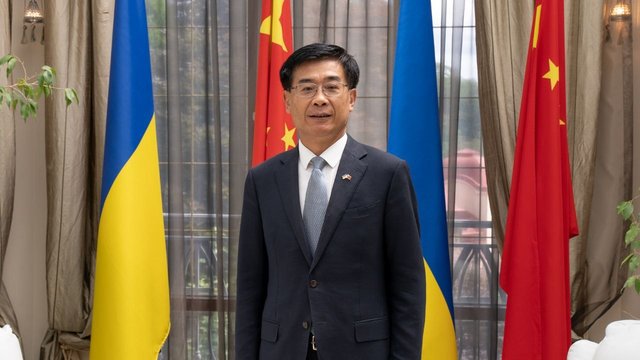
Valerii Zaluzhnyi, Ambassador Extraordinary and Plenipotentiary of Ukraine to the United Kingdom of Great Britain and Northern Ireland, Commander-in-Chief of the Armed Forces of Ukraine (2021-2024)
Speech at the Defence & Resilience Tech Scale Up Showcase, London
As of the end of summer 2026, the full-scale war waged by the Russian Federation against Ukraine has no parallel in Europe since the Second World War. Since the second half of 2026, the scale of Russia’s air attacks has increasingly taken on the characteristics of a deliberate and systematic campaign to destroy Ukraine’s transport, logistics, industrial and social infrastructure. The objective is not only to gain an advantage on the battlefield, but also to extend the effects of the war across the entire country – with the aim of creating a socio-economic, financial and demographic crisis.
All of this has been enabled by the continuation of the war and by rapid technological innovation, above all through the use of unmanned systems and artificial intelligence. I believe this is precisely why armed forces and Western states must adapt immediately to new forms and methods of warfare if we are to avoid a catastrophe. This presents, on the one hand, an enormous field for investment. On the other hand, we face a dead end built on bureaucracy and an unwillingness to change. It is comfortable to have verbal security guarantees and a quiet, peaceful life, stable revenues from existing contracts, and a sense of security based on the assumption that someone else will take care of the problem. But I am not here to lecture you. I am here to speak about Ukraine – a country that continues to fight because there is no other way forward, and about our hope for Victory, which remains very much alive.
Ukraine is grateful for every package of support provided by our partners. This support is critical not only to Ukraine’s ability to defend itself and survive, but also to the security of the Euro-Atlantic space. A space where we are facing a fundamental choice between the desire for cheap energy and the ability to preserve genuine freedom and security.
At the same time, to achieve victory – or, as we increasingly say today, a just and dignified peace – what is required is systemic pressure on Russia’s ability to continue waging this war. Systemic pressure has little to do with individual technological solutions or with the way events are presented on social media. Systemic impact means implementing strategies designed to achieve the ultimate objective – victory over the enemy.
And, of course, such systemic pressure can only be built on the basis of clear strategies. These strategies must be underpinned by financial and technological policies that enable us to produce today what will be needed tomorrow – or better the day after tomorrow. What is needed today should already be available from stockpiles as something that was produced yesterday. Defence production must be part of a strategy for war, not the other way around – a situation in which the war is expected to justify someone’s promises and profits. This is the only way to seize the initiative, impose your will on the enemy, and ultimately be in a position to demand something from him.
You have just heard two key words, and they are directly relevant to every person in this room: finance and technology. These are the foundations of future investment that can be made in Ukraine’s experience and, as a consequence, in Europe’s victory. Because, ultimately, nobody wants to face Ukraine’s fate. Some of the capabilities we need may already be reaching their limits within the UK public sector. But there is still considerable capacity within the private sector. The private sector simply does not yet see the full picture of what I am talking about. And I am not talking about marketing – initiatives that deliver little beyond media visibility and quick, short-term profits. I am talking about investment – investment in the future, financial and technological investment – as part not only of Ukraine’s strategy for victory, but also as a long-term investment in your own national defence capabilities and your own security.
Ukraine has built an almost entirely new and modern defence industry based on cutting-edge technologies. However, much of this has been an experience of making use of access to existing technologies and finding ways to make them cheaper and more scalable. One consequence has been, for example, the transformation of drones into the main means of engagement for ground forces. Ukraine has accumulated enormous expertise in the development and production of drones. However, the component base – and, in particular, its production – remains largely outside Ukraine. This limits both the ability to scale production and the ability to modernise these systems in the longer term. And this is precisely where we see the future: a future in which strategy takes precedence over marketing, and where the contours of victory finally become visible.
These investments are already urgently needed to address immediate threats, including ballistic missiles and jet-powered drones. And, in my personal view, the evolution of the jet-powered Shahed is particularly illustrative of how technologies are changing. We have moved from the expensive missile systems of the Cold War era to the low-cost missiles of the war of machines. Yes, I did say missile. But this is a missile that is no longer a weapon reserved for the few.
And this raises a fundamental question: should defence against such weapons also become a privilege of the few because it is prohibitively expensive? How will you defend yourselves against such weapons if doing so is economically unsustainable? Probably not. And the more we treat technologies as a means of warfare reserved for the powerful and wealthy – and as an opportunity to make profits today – the more likely we are to become victims tomorrow of those who are poorer, more frustrated and less constrained. Because their weapons are already becoming as cheap as possible, widely accessible, and capable of delivering devastating effects.
Ukrainian companies are capable of responding rapidly to battlefield requirements and developing new types of weapons based on real combat experience. No other country can offer more relevant and up-to-date experience for developing new weapons, modernising existing systems, and refining the ways in which they are employed. Yet the lack of technologies and financing prevents Ukraine from seizing the initiative from Russia and its partners.
That is why we call on our partners to increase financial and technological investment in defence production in Ukraine – not only to reduce Russia’s military potential, but also to strengthen your own defence capabilities.
Public funding for defence innovation in Ukraine remains limited. Therefore, private investment can and should become a mutually beneficial solution for both sides. Establishing clear mechanisms for cooperation with the United Kingdom at the institutional level would help attract private capital and technology, create new markets, and ultimately develop long-term cooperation between Ukraine’s defence industry and those of its partners.