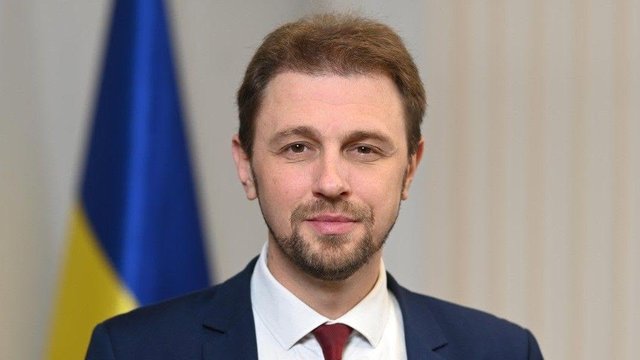
Andriy Dubas, President of the Association of Ukrainian Banks
For several years, massive government spending related to the war was one of the main drivers of the Russian economy. Military contracts ensured demand for businesses, supported employment, household incomes, and consumption. Now, this model is producing significantly weaker results: economic growth is slowing, the cost of capital remains high, and budgetary and production constraints are becoming more visible.
This is clearly evident from GDP trends. After growing by 4.9% in 2024, the Russian economy expanded by only 1% in 2025. In 2026, the Russian Ministry of Economic Development expects growth of just 0.4%, while the Bank of Russia forecasts growth in the range of 0–1%.
Government procurement supports demand; resources are concentrated in military sectors
The Bank of Russia explicitly identifies the consumer sector and the portion of the manufacturing industry focused on government procurement as key drivers of economic growth. This explains why significant government spending has long allowed Russia to sustain economic activity despite sanctions and other restrictions.
This model concentrates resources in sectors that serve government contracts. Meanwhile, parts of the civilian economy face more challenging conditions.
The need to maintain a balance between the military and civilian sectors is already being discussed within Russia itself. Putin’s special representative, Boris Titov, has warned against an excessive concentration of the economy on the needs of the military-industrial complex.
This is an important signal: while military demand remains significant, its ability to drive growth across the entire economy is gradually weakening.
High borrowing costs are accompanied by production constraints.
Another factor is the high cost of financing. Following a prolonged period of tight monetary policy, the Bank of Russia’s key rate stood at 14% in July. For businesses, this means expensive loans and more challenging conditions for new investments.
In August, the manufacturing PMI fell to 48.8 points. Companies reported declines in production and new orders, weaker demand, and rising costs for fuel and imports.
The Bank of Russia is already anticipating a further economic slowdown due to a “temporary loss of capacity” in manufacturing and logistics. This is a fundamentally important point: the issue is no longer just about demand or the cost of borrowing, but about the economy’s ability to produce and supply goods.
The consequences of Ukrainian strikes on Russian energy and logistics infrastructure are emerging as a separate factor. In particular, Russia has already revised its oil production forecast for 2026 downward, and Reuters cites the effects of the war and strikes on oil refineries among the reasons.
Budgetary pressure is becoming increasingly evident
The changes are most evident in public finances. According to preliminary data from the Russian Ministry of Finance, the federal budget deficit for January–July 2026 amounted to 6.455 trillion rubles, or 2.8% of GDP. The current annual plan calls for a deficit of 3.786 trillion rubles. The Ministry of Finance itself attributes a significant portion of the accumulated deficit to front-loading of expenditures.
Oil and gas revenues to the federal budget fell by 16.8% year-over-year over the seven-month period, to 4.595 trillion rubles. During the same period, expenditures rose by 14.5% to 28.567 trillion rubles.
Military and security spending remains substantial. The 2026 budget allocates approximately 16.84 trillion rubles for defense, security, and law enforcement combined.
The pressure is also evident at the regional level. According to Ukraine’s Foreign Intelligence Service, in 65 of 85 Russian regions, real budget revenues at the end of 2025 were lower than in 2021. Among the reasons are reductions in federal transfers and corporate income tax revenues.
The Russian economy has so far managed to maintain its export revenues, large domestic market, and ability to reallocate significant budgetary resources. However, an ever-increasing portion of these resources is being directed toward the war effort, which limits opportunities for civilian investment, modernization, and regional development.
The cost of the war is becoming increasingly visible for Russia. In fact, it is already paying for it with its own future.